












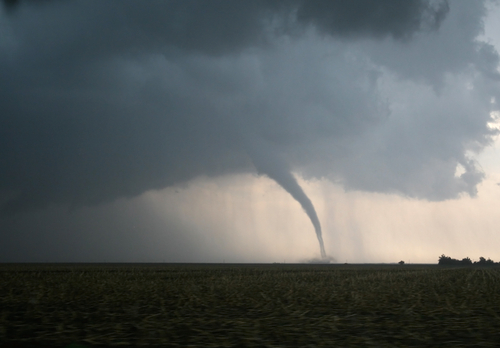
According to preliminary estimates, tornadoes ripped a 200-mile path through six states in the Midwest and South, demolishing homes and leveling businesses and causing $5 billion in insured losses.
Climate change has resulted in an increase in so-called "secondary peril" weather events, which are smaller than hurricanes but less predictable. Other secondary hazards include small to medium-sized localized events such as wildfires, winter storms, and hail storms.
According to some insurance experts, these events pose risk management challenges for insurers and, as a result, raise premiums.
"We've got a year of over $100 billion in catastrophe events without having a big named event, whether it's an earthquake or a hurricane," Howden Broking Group Chairman Barnaby Rugge-Price told Reuters.
"Clearly, something else is going on, the most obvious of which is climate change," he said.
According to reinsurance broker Guy Carpenter, the average number of tornadoes in the United States is 1,500 per year, with only 25 occurring in December. The company described this month's tornado outbreak as "exceptionally rare" in terms of the season, intensity, and length of storm paths.
According to catastrophe modeling firm Karen Clark & Company, studies suggest that rising Gulf of Mexico surface temperatures are linked to intense thunderstorm updrafts that can generate tornadoes in the United States' Southeast's Dixie Alley (KCC).
Warmer air in late autumn and early winter creates favorable conditions for tornado formation, potentially extending the severe weather season across North America, according to reinsurer Guy Carpenter & Co LLC.
Secondary perils, in contrast to primary perils such as hurricanes, which have the greatest potential for loss and are thus closely monitored and modeled, are unpredictable.
They are more difficult to model due to a lack of data, according to Rugge-Price, making it more difficult for the industry to assess the risks.
"Hurricanes have been recorded, and we know the path and the damage, whereas tornadoes just...appear," he added.
According to some experts, it is difficult to establish a direct link between climate change and the increasing severity of tornadoes. Tornadoes form in specific atmospheric conditions, according to KCC, and it may be "difficult to attribute specific trends in severe weather to climate change."
Nonetheless, the severity of such secondary hazards has increased this year.
According to reinsurance giant Swiss Re, the global insurance industry was facing an estimated $105 billion in losses this year, the fourth-highest on record, without a single major weather disaster.
While Hurricane Ida was the costliest natural disaster in 2021, secondary peril events such as winter storm Uri, which brought freezing temperatures to Texas, accounted for more than half of the losses.
According to Swiss Re, at least one severe annual secondary peril event is the new "norm," with each resulting in more than $10 billion in losses.
"Natural disaster losses are likely to continue growing as wealth, urbanization, and the effects of climate change increase," the company said.
PROPERTY PREMIUMS
According to insurance industry sources, more severe events have pushed up property insurance prices in the United States over the last four years. Swiss Re reported that clients with significant exposure to secondary perils experienced above-average rate increases in the third quarter.
Insurance premiums are expected to rise further, according to brokers, and property owners seeking insurance must also bear higher retentions, or the initial costs they must bear before insurance kicks in.
"We do not anticipate a reduction in available capacity for tornado coverage," said Dave Reasons, Marsh's U.S. Central Zone Property Leader. However, he stated that some clients were willing to bear retentions that were ten times higher than in the past in order to keep premiums low.
"We may see discussions about the appropriate retentions and pricing for that."