












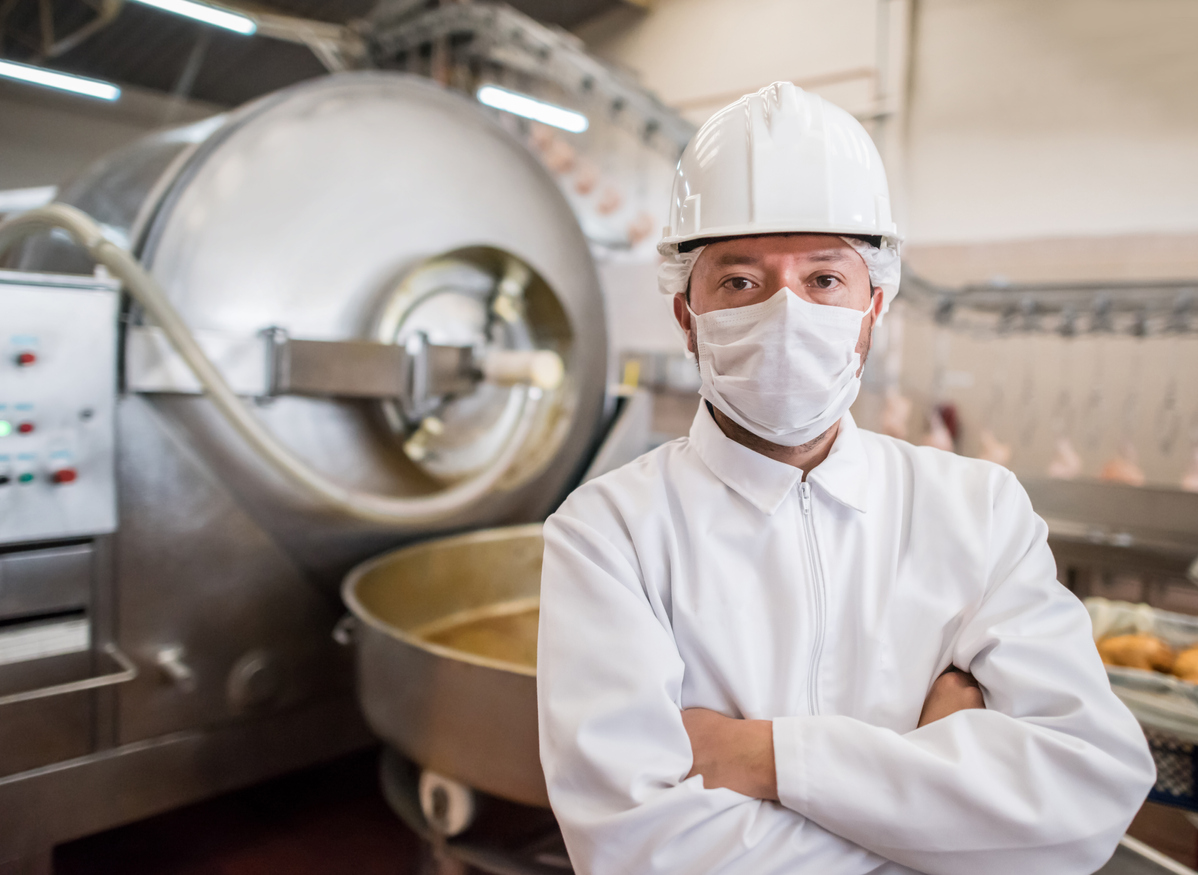
That position is no longer available, according to Smithfield Foods.
According to BJ Motley, president of the United Food and Commercial Workers (UFCW) union branch that represents Smithfield workers in Sioux Falls, South Dakota, the plant gradually moved employees who worked as safety monitors to other positions.
Smithfield, which is owned by Hong Kong-listed WH Group Ltd, stated that the monitors' responsibilities were transferred to other personnel in the second quarter of this year because COVID-19 safety protocols had become "second nature" and vaccines were available. In terms of cleaning, the company stated that facilities are "routinely sanitized for food safety reasons."
According to interviews with 10 plant employees, union officials, and worker advocates, U.S. meat and chicken plants that reported some of the country's largest coronavirus outbreaks last year have eased or adjusted protective measures put in place near the start of the pandemic.
Concerns about worker safety in slaughterhouses, where employees are often in close quarters, have made it more difficult for meat processors to hire and retain workers at a time when labor is already scarce and demand is high.
Despite the fact that many states have relaxed COVID-19 mask and social distancing rules, meat companies such as Smithfield, Tyson Foods Inc, and JBS USA say employee health is a top priority and that masks are required in plants.
Workers and advocates believe the companies could do more as the contagious Omicron variant spreads and meat prices rise.
"We don't have anyone in charge of keeping track of social distancing. We don't have anyone wiping down the tables. It's all back to normal now "Motley stated.
According to the most recent data, approximately 59,000 meatpacking workers were infected with COVID-19 at Smithfield, Tyson, JBS, Cargill Inc, and National Beef Packing Company plants in the United States from October to January, according to a U.S. House of Representatives subcommittee report.
Smithfield stated that it has spent more than $800 million to protect employees from COVID-19 and that it adheres to federal health and safety guidelines.
Smithfield was cited by the Occupational Safety and Health Administration in 2020 for failing to protect Sioux Falls workers from COVID-19, and the company agreed last month to review its operating procedures as part of a settlement. Last year, Smithfield said the citation was without merit.
Smithfield uses barriers between workstations and social distancing "when feasible" in addition to masks to keep employees safe, according to spokesman Jim Monroe.
"In no way have we rolled back COVID-19 safety protocols," he said. "We are confident that our precautions are effective in reducing COVID-19 illness among our employees."
According to Darryl Blackwell, a UFCW steward who slices fat from pork at the Vernon, California, Smithfield plant, which operates under the name Farmer John, employees stopped working as social distance monitors about three months ago. He'd like to see them come back.
"As far as social distancing goes, you can pretty much do whatever you want," he said. "You can't be too cautious with this new variant."
Smithfield confirmed that monitor duties had been delegated to other employees. The company did not provide any information on vaccination rates. According to the report, Smithfield hosted approximately 200 on-site vaccine drives, including boosters, and that shots are widely available.
Monroe stated, "Our vaccination and case rates are excellent."
Motley estimated that the South Dakota plant is about 60% vaccinated, compared to a national rate of about 65 percent. He and Blackwell both stated that boosters were not available at their respective facilities.
'ALWAYS ELBOW-TO-ELBOW'
JBS USA, a rival meat processor owned by Brazil's JBS SA (JBSS3.SA), began staggering employees' break times at slaughterhouses last year to promote physical distancing. The company stopped the practice at a massive beef plant in Greeley, Colorado, in July 2021, according to the UFCW Local 7 union branch that represents plant workers.
"Unless they rebuild the plant or slow down the line speeds, they're still elbow-to-elbow in the plant," Kim Cordova, president of UFCW Local 7, explained.
JBS kept the vast majority of COVID-19 protocols in place, according to company spokeswoman Nikki Richardson, and adjusts procedures as it evaluates cases among employees and in the community.
According to state data, the Greeley plant has reported more than 400 cases of COVID-19 among workers, including 19 since Oct. 25, 2021.
JBS reported that the Greeley plant has an 80 percent vaccination rate, with 35 percent receiving boosters, and that 86 percent of all employees are vaccinated. New employees must be immunized. more info
Tyson Foods, the only major meatpacker that requires all workers to be vaccinated, has stated that its rate exceeds 96 percent, and plants have begun offering boosters. more info
A worker at a Tyson chicken plant in Rogers, Arkansas, said management informed him that the plant had stopped monitoring social distancing.
The monitors' responsibilities were transferred to plant leadership and maintenance personnel, according to Tyson spokesman Derek Burleson. According to him, facilities also have signs encouraging social distancing.
Wayne Farms, another chicken processor, has a vaccination rate of only 31 percent at a plant in Decatur, Alabama, and 42 percent overall, according to spokesman Frank Singleton. He stated on Friday that the Decatur plant has not reported any positive COVID-19 cases since November 22.
Mona Darby, who has worked at the Decatur plant for 34 years, said Wayne Farms used to pay her to arrive 20 to 30 minutes early in order to enforce proper mask-wearing as other employees arrived. Darby estimated that half of the workers correctly wore their masks over their noses and mouths.
According to Darby, who is also a local leader for the Retail, Wholesale, and Department Store Union, the company terminated that role and stopped providing employees with staggered breaks over the summer.
Darby's assistance was not required, according to Singleton, because almost all workers wear masks as required by law.
Darby stated that the Decatur plant now has two production lines, down from five prior to the pandemic, due to employee turnover.
The company confirmed that it operates two lines and that it has been impacted by a labor shortage, but that it continues to process the same number of chickens daily.
"They just can't get anyone to stay," Darby explained.