












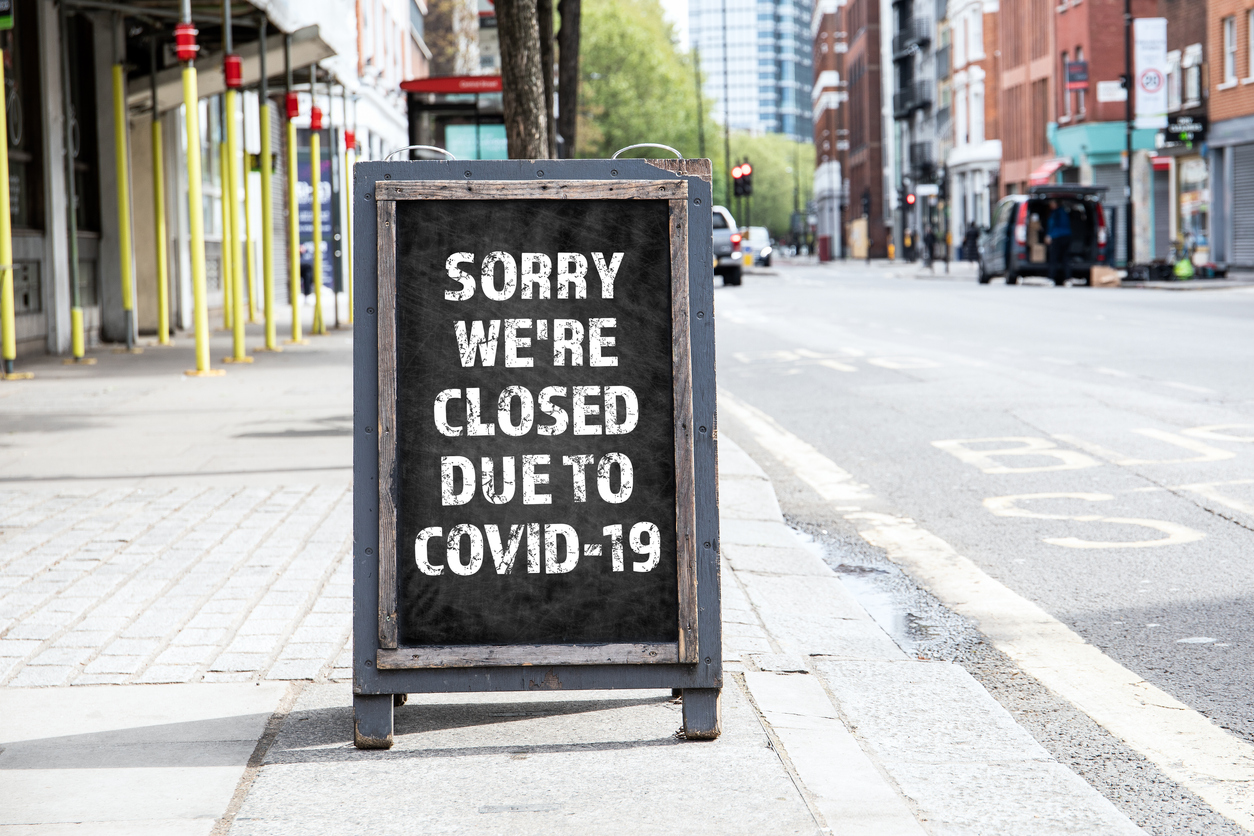
In the third such case to reach a state's highest court, the Ohio Supreme Court appeared poised to join a majority of mostly federal courts nationwide in rejecting hundreds of insurance claims filed by businesses during the pandemic.
As a lawyer for an audiology services provider bringing a proposed class action against Cincinnati Insurance Co argued that the virus could cause property damage entitle businesses to coverage, the justices questioned that premise.
"I'm not sure how you define physical damage," Justice Sharon Kennedy said.
Although insurance policies are governed by state law, the insurance industry's victories in similar cases have largely come from federal courts. Only two other state supreme courts, in Massachusetts and Vermont, have addressed the matter.
The case was heard by the Ohio Supreme Court at the request of U.S. District Judge Benita Pearson, the federal judge presiding over Neuro-Communication Services Inc's lawsuit, who said it raised an important state law question that the justices should be able to address.
According to Nicholas DiCello, a lawyer with Spangenberg Shibley & Liber's Neuro-Communication Services, the coronavirus is no different than other odorless, invisible gases or agents that can trigger property damage claims, such as carbon monoxide or radon.
DiCello argued in court that a long line of pre-pandemic cases supported coverage in incidents where those gases or agents rendered a business unusable, and that coronavirus particles can similarly damage a property when someone emits them.
"They are physical particles with physical manifestations," he explained. "They can be quantified. They are calculable."
"They can also be wiped away," Chief Justice Maureen O'Connor retorted, noting that a court employee had cleaned the podium DiCello spoke from shortly before his argument.
Some of the court's six other members, including Kennedy and Justice Patrick DeWine, used that analogy to question DiCello about how a business could sustain physical damage from the virus and still be covered.
"It still exists," Kennedy said, referring to the podium. "Even if you wipe it away, it still exists. It's unblemished and unharmed."
Neuro-Communication has claimed that it was harmed by being forced to close early in the pandemic by order of Ohio Governor Mike DeWine, a Republican and Justice DeWine's father, in order to slow the virus' spread.
However, Daniel Litchfield, a lawyer for Cincinnati Insurance at Litchfield Cavo, argued that the Neuro-losses Communication's could not be recovered through property insurance.
"Most government orders that I'm aware of as a businessperson cost businesses money," he explained. "It's part of doing business in a regulated or partially regulated economy."
He stated that only a business interruption caused by physical damage, such as a fire, could entitle a policyholder to coverage.
"We must not dismiss the word 'physical,'" he said.