











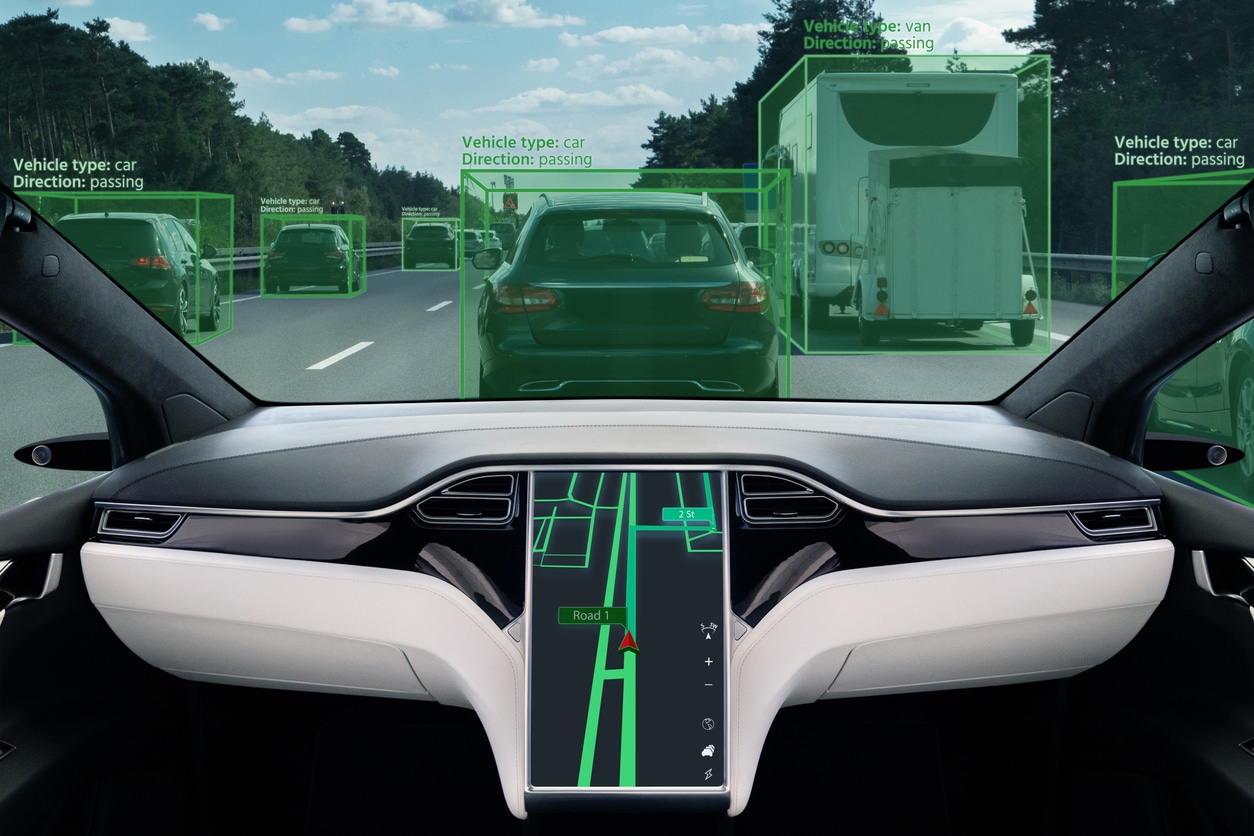
The shift to autonomous vehicles is a great unknown for the auto insurance industry, but to analysts at Bank of America Corp., it presents a potential “goldmine.”
Investors are concerned about how liability will be handled when driverless cars become more mainstream. Under the current U.S. system, the driver is responsible in the event of an accident. With autonomous vehicles, there is no driver, so liability would need to move from personal policies to commercial carriers.
Bank of America (BofA) analysts led by Joshua Shanker wrote in a note to clients Thursday that such a change could remove one of the “impediments to insurer profitability.” They noted that auto insurers typically lose money on liability protection, so shifting the onus to carmakers and software engineers would be financially beneficial. “In theory, the personal lines industry might be pleased to offload some of the risks posed by the fickle US tort system,” the analysts wrote. “Instead of bearing the risk of loss on their own balance sheets (and supplying the capital to support it), auto carriers would happily process claims and subrogate payments to newly liable commercial insurance parties,” they added.
Skeptics argue that autonomous driving will reduce accidents caused by human error, driving down insurance costs and squeezing insurers’ margins. However, BofA’s analysts said “the data suggests otherwise.” They pointed out that even as technology has helped improve the frequency of car accidents, the severity of those accidents has increased at a pace that exceeds any benefits from fewer incidents. “Auto accident frequency has improved consistently for more than a hundred years, but, over the past 2-3 decades, despite myriads of safety innovations, the pace of improvement has notably slowed,” the note said.
The potential impact of autonomous vehicles on insurance has drawn widespread attention, particularly after high-profile deaths associated with the technology. At the same time, driverless taxis from Tesla Inc. and Alphabet Inc.’s Waymo are becoming more prevalent.
Other Wall Street firms have weighed in as well. In June, Goldman Sachs estimated that the rise of self-driving cars could force a reconfiguration of the roughly $400 billion U.S. auto-insurance industry as accidents caused by human error decrease and costs are slashed.
Taken together, BofA’s analysis of a liability shift toward commercial parties and Goldman Sachs’ estimate of broad industry reconfiguration underscore the significant changes that autonomous vehicles could bring to how auto risk is allocated and priced. This discussion continues as autonomous technologies and driverless services expand.
Get the latest insurance market updates and discover exclusive program opportunities at ProgramBusiness.com.