











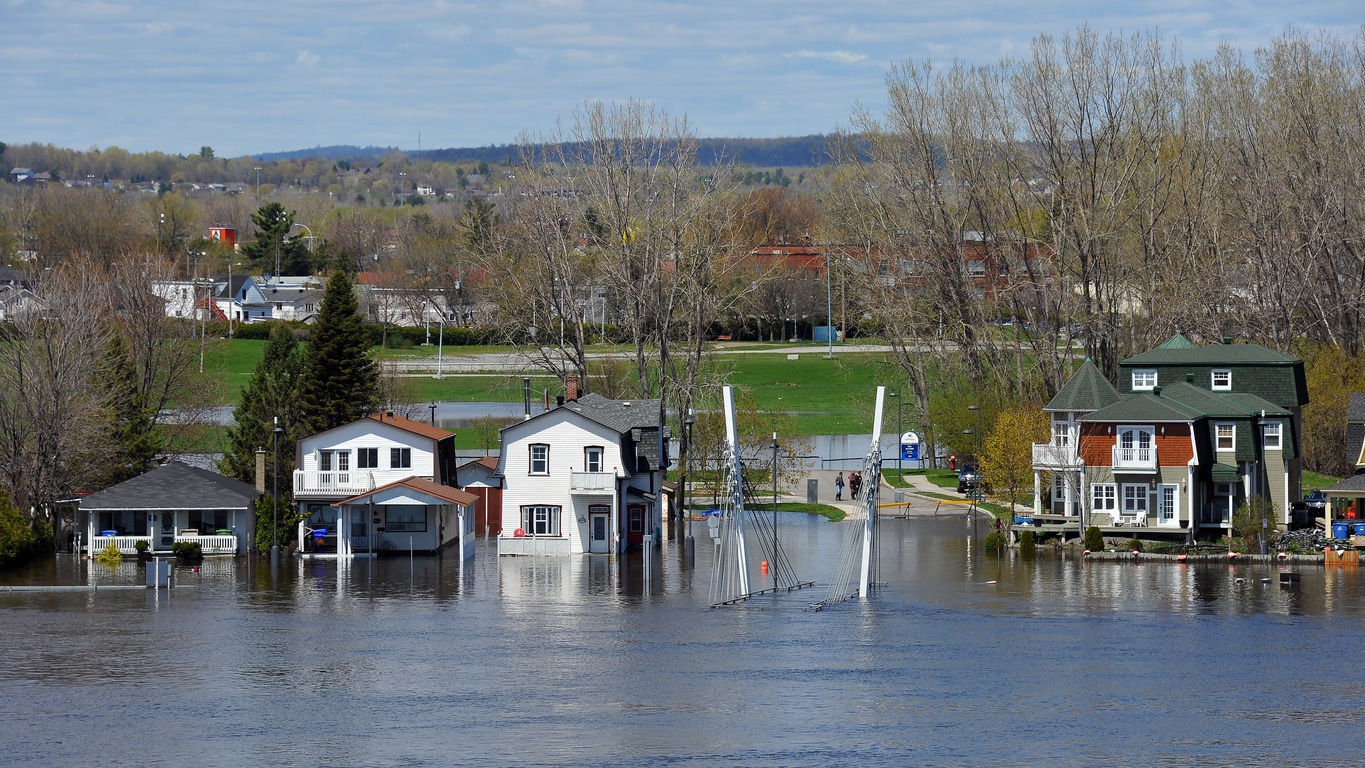
The study, published in Water Resources Research, utilizes survey data from thousands of Austrian households to examine how individuals respond to flood events over time and how these responses interact with large-scale public infrastructure, such as dams and retention basins. The model is designed to describe, in mathematical terms, how natural conditions and human behavior influence each other in the context of flood risk.
Rising Flood Risk in a Changing Climate
According to the research team, many regions will face more severe flood events in the coming decades as climate change progresses. There are two main ways people can respond:
- Individuals can take steps to protect themselves, such as purchasing insurance, making home modifications, or planning for emergencies.
- Communities and governments can invest in public protection measures, including dams, levees, and retention basins, to reduce overall flood risk.
The new model focuses on how these two approaches interact over time rather than viewing them in isolation.
“After the Flood” Behavior: Preparedness Rises, Then Fades
Lead author Gemma Carr, from the Institute of Hydraulic Engineering and Water Resources Management at TU Wien, explains that people’s attitudes toward flood protection change after they experience a flood.
During and after a flood disaster, residents tend to gain knowledge about the hazard, its impacts, and their own vulnerability. They become more aware of the risks and, for a time, are more willing to invest in measures such as:
- Safeguarding their homes,
- Developing emergency plans, and
- Taking out insurance.
In total, 3,770 households across Austria were surveyed, and the team analyzed this data to understand these behavioral shifts.
The results show a clear pattern: when no floods occur for a period of time, household preparedness decreases significantly. Even if scientific assessments of flood risk remain the same, people tend to downgrade the priority of flood protection in their own decision-making.
Public Protection Can Lower Private Readiness
The model also explores how public flood protection measures influence individual behavior.
Carr notes that when public infrastructure reduces the likelihood of flooding, the direct effect is positive — fewer events and less frequent damage. However, the study shows that this can also lead to unintended consequences. As the perceived risk declines, some individuals may reduce their own preparedness or forgo private measures that would still be prudent in the long term.
This phenomenon has been discussed conceptually in the past. According to the authors, this study is the first to empirically demonstrate the effect using household survey data and to integrate it into a socio-hydrological model, enabling a quantitative analysis of how natural conditions, public interventions, and private decisions interact.
The research also includes a schematic representation of properties located in 30-, 100-, and 300-year flood zones. The diagram illustrates how public measures can reduce the probability of flooding in each zone over time, thereby lowering exposure. At the same time, the model accounts for how household preparedness and structural measures at the property level reduce vulnerability to damage.
Earlier and Potentially Higher Costs Under Climate Change
The model is used to investigate how climate change may alter the timing and magnitude of major flood events.
Carr points out that a large, once-in-a-century flood, which might previously have been expected decades in the future, could occur within just a few years under climate change conditions. If that happens, public and private protective measures may not yet have reached the levels anticipated for a later date.
In that case, costs would arise earlier than expected and may be higher, because communities and households would still be in the process of building up their protective capacity.
Importance of Proactive Flood Protection
The study emphasizes the importance of taking action before major flood events occur. Carr emphasizes that it is essential to promote proactive flood protection rather than relying only on a surge of activity after disasters.
From the authors’ perspective, key elements of proactive protection include:
- Providing better information about flood risks,
- Offering opportunities for households to protect themselves in time, and
- Raising awareness of flood protection options.
According to the paper, these steps can help minimize long-term costs by strengthening resilience in advance of extreme events.
Public and Private Measures as Complements
One of the central messages of the model is that public and private measures should not be viewed as substitutes for each other. The analysis suggests they work best when they complement each other.
The model shows that reducing government flood protection increases overall risk, and that this increased risk cannot be fully offset by stronger private precautions alone. While the study indicates that individual precautions should be enhanced, it also reports that withdrawing public support — effectively “privatizing the risk” — is not a sensible solution from the authors’ standpoint.
Instead, the research frames flood protection as a combined effort: public infrastructure to reduce hazard and exposure, alongside household-level and structural measures to lower vulnerability.
The findings aim to enhance understanding of how societies adapt to changing flood risks and how public policy and individual behavior, when considered together, shape future flood impacts.
Stay informed and ahead of the curve — explore more industry insights and program opportunities at ProgramBusiness.com.