











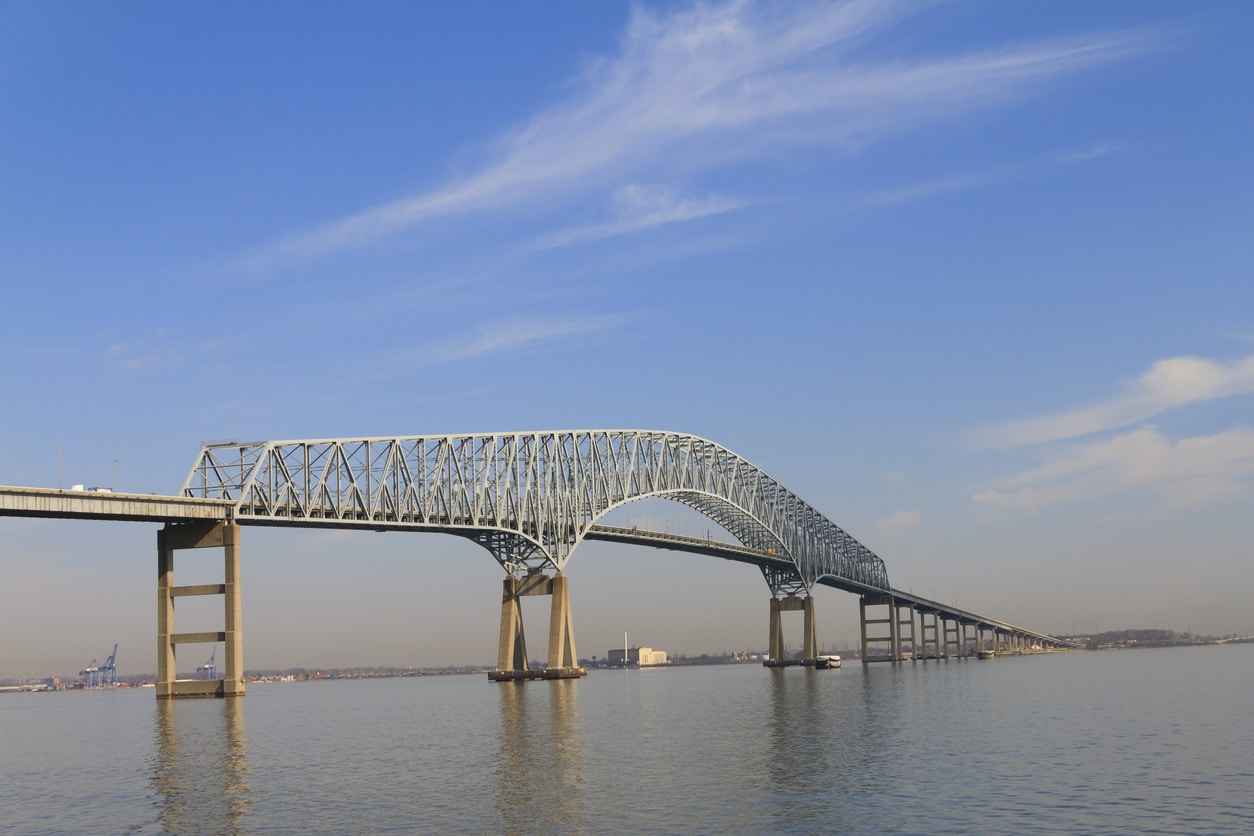
The projected cost of rebuilding Baltimore’s Francis Scott Key Bridge has risen to as much as $5.2 billion, creating a significantly more complex and expensive risk environment for insurers than when the bridge collapsed 20 months ago.
Maryland transportation officials more than doubled earlier estimates due to construction inflation, expanded engineering requirements, and enhanced safety measures intended to prevent a similar maritime collision. The expected completion date has also shifted to late 2030, which is two years later than previously planned.
Marine Collision Sparks Marketwide Insurance Concerns
The original collapse occurred when the container ship Dali lost power and struck a support pier. Early estimates suggested the rebuild might cost around $2 billion, raising immediate questions about potential liability exposure for the vessel’s insurer, a major P&I club.
With projected costs surpassing $4 billion, any subrogation efforts by state or federal authorities could become one of the largest marine liability claims in United States history. Reinsurers that support P&I clubs are preparing for potential impacts across multiple treaty years.
Builders Risk and Surety Under Greater Pressure
The redesigned bridge will be larger and feature more protective elements, which carries significant implications for insurers covering the construction phase. Builders risk underwriters must evaluate longer timelines, increased replacement values, and more complex marine-focused engineering work.
Surety carriers are also facing heightened exposure. Multi-billion-dollar performance and payment bonds are uncommon in United States infrastructure projects. Political delays or funding disputes elevate the risk of default, and bond analysts have expressed concerns about project continuity if federal support becomes uncertain.
Inflation Complicates Infrastructure Underwriting
Federal data shows that highway construction costs have increased approximately 72 percent over the past five years. As a result, insurers are recalibrating infrastructure underwriting to account for the following factors:
- Catastrophic losses now carry significantly higher repair costs.
- Delays directly contribute to additional insured losses.
- Replacement values for large structures such as bridges, tunnels, and ports continue to fluctuate.
The Francis Scott Key Bridge rebuild is emerging as a reference point for understanding how modern infrastructure claims can routinely reach multi-billion-dollar levels.
Political Tension Adds New Uncertainty
Federal politics have become intertwined with the project. The Trump administration has questioned the project’s cost, contracting procedures, and schedule. The administration has also shown a willingness to withhold infrastructure funding in other states during procurement disputes.
This uncertainty affects insurers with exposure to public-sector risks. Interruptions, delayed payments, or contract disagreements can lead to claims across surety, D&O, and public-entity liability policies.
A Rebuild That Is Reshaping Risk Models
Rising costs, extended timelines, and political complications have turned the Key Bridge rebuild into a wide-ranging test of the insurance sector’s resilience. Many carriers are adjusting pricing, retentions, and appetite for infrastructure-related exposures. Reinsurers view the situation as an indication that major United States public-works losses may now involve volatility similar to that seen in natural catastrophes.
As the project progresses along the Patapsco River, the industry is watching closely. The emerging reality is that in today’s economic environment, the risks associated with rebuilding major infrastructure extend far beyond the initial collapse.
Get the latest insurance market updates and discover exclusive program opportunities at ProgramBusiness.com.