











Extreme weather events caused hundreds of billions of dollars in damage and economic losses across the United States in 2025, according to preliminary estimates from AccuWeather experts. Although the total costs were lower than the catastrophic losses recorded in 2024, the financial impact remained substantial and widespread.
AccuWeather estimates that seven major weather disasters resulted in $378 billion to $424 billion in total damage and economic loss nationwide this year. Notably, these losses occurred without a single hurricane making landfall in the United States or a major wildfire striking a densely populated area during peak wildfire season.
Overview of Major Weather Disasters in 2025
AccuWeather identified several high-impact weather events that drove the year’s losses. The most costly disaster involved catastrophic wildfires that destroyed neighborhoods near Los Angeles. These fires alone caused an estimated $250 billion to $275 billion in damage.
In addition, a rare atmospheric river combined with a tornado outbreak in the central United States resulted in $80 billion to $90 billion in losses. Hurricane Melissa caused catastrophic damage in the western Caribbean, with estimated losses ranging from $48 billion to $52 billion.
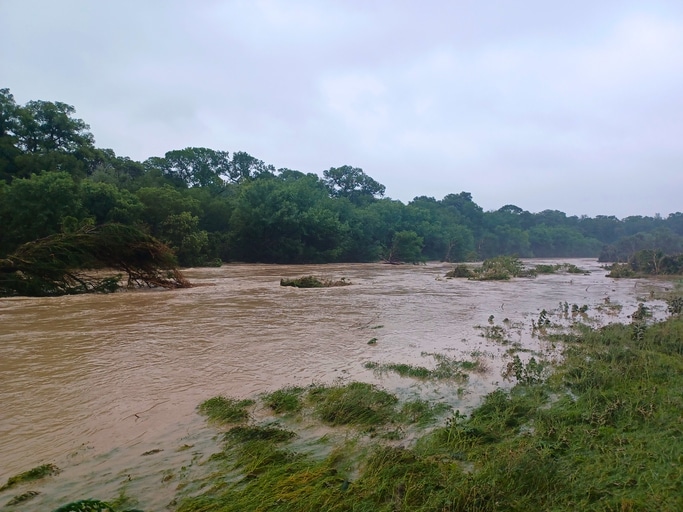
Other significant events included a flash flood disaster in the Texas Hill Country that claimed more than 100 lives and caused $18 billion to $22 billion in damage. A historic winter storm brought snow to the Gulf Coast, resulting in $14 billion to $17 billion in losses. More than 70 tornadoes struck the central United States during a May outbreak, causing $9 billion to $11 billion in damage. Tropical Storm Chantal triggered flash flooding in the Carolinas, producing $4 billion to $6 billion in losses. Additionally, an October tropical wind and rainstorm caused widespread coastal flooding with an estimated cost of $3 billion.
First-Half Disasters Drive Annual Losses
This year marked the first time since AccuWeather began issuing preliminary damage estimates in 2017 that the costliest weather disasters occurred during the first half of the year. The most destructive event struck in early January when wind-driven wildfires swept through neighborhoods near Los Angeles and Malibu, destroying thousands of homes and businesses.
During the same period, a historic winter storm brought snow and ice to the Southeast and Gulf Coast. In April, a rare atmospheric river delivered months’ worth of rain in just days across the central United States, leading to widespread flooding. Severe weather outbreaks in May produced dozens of tornadoes, including one that tore through parts of the St. Louis metro area. Dozens of lives were lost during these early-year events, and recovery efforts continue in several affected communities.
Comparison to 2024 Losses
While 2025 losses exceeded $300 billion, they remained lower than those recorded in 2024. AccuWeather estimates that nine weather disasters in 2024 caused between $479 billion and $532 billion in combined damage and economic loss. According to AccuWeather, the absence of major disasters during the second half of 2025 provided a temporary reprieve for families and businesses still recovering from prior years.
Climate Factors and Economic Disruptions
AccuWeather climate experts reported that extreme weather over the past two years has disrupted agriculture, supply chain logistics, tourism, and travel. A warmer atmosphere holds more moisture, which increases the potential for extreme rainfall and flash flooding. At the same time, rising ocean temperatures extend the window for tropical development later into the year.
A climate analysis released by AccuWeather in November found that extreme rainfall events have increased significantly across the contiguous United States over the past 30 years, even as average annual precipitation declined by 2.7% during the same period. This trend increases flash flood risks while also intensifying long-term drought and wildfire concerns.
Experts also noted that development continues to expand into flood-prone river valleys, fire-prone hillsides, and low-lying coastal areas, placing more people and businesses at risk. Global temperature data indicates that 2025 is on track to become the second hottest year on record, likely tying 2023 and trailing only 2024.
Record-Breaking Weather Events in 2025
Several extreme and record-setting weather events occurred during the year. The Atlantic hurricane season ended without a U.S. hurricane landfall, although Hurricane Melissa produced record-shattering impacts in the Caribbean, including a 252-mile-per-hour wind gust. The first EF5 tornado since 2013 was confirmed in North Dakota. Scientists also confirmed the world’s longest lightning flash, stretching from Texas to Missouri.
More than 3,000 high temperature records fell during a major heat wave, and March became the windiest on record. Global sea ice reached a new record low, and Florida recorded more seasonal snow than Alaska following a Gulf Coast snowstorm.
How AccuWeather Estimates Losses
AccuWeather calculates total damage and economic loss by evaluating both direct and indirect impacts from extreme weather events. These estimates include insured and uninsured losses, property damage, job and wage losses, crop damage, infrastructure impacts, supply chain disruptions, evacuation costs, emergency response expenses, and short- and long-term health effects.
AccuWeather first issued widely cited total damage estimates in 2017 during catastrophic flooding from Hurricane Harvey. Since then, these assessments have helped provide a broader understanding of the full financial and societal impacts of extreme weather disasters across the United States.
Get the latest insurance market updates and discover exclusive program opportunities at ProgramBusiness.com.