












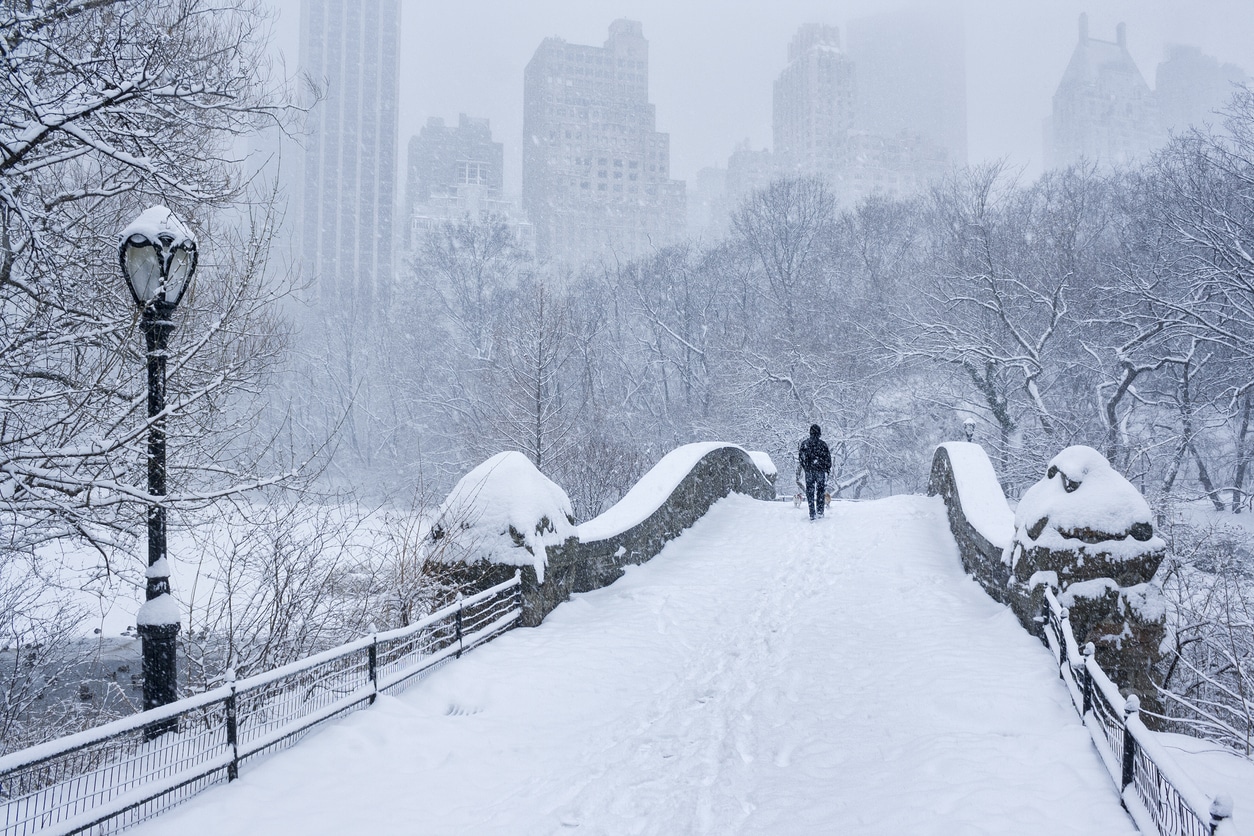
A powerful winter storm, named Winter Storm Hernando by The Weather Channel, brought blizzard conditions to large portions of the Northeast, impacting tens of millions of residents from the mid-Atlantic through New England. The system intensified rapidly into a bomb cyclone, producing heavy snowfall, high winds, power outages, and coastal flooding.
Heavy Snowfall Totals Across Multiple States
The storm delivered widespread snowfall totals exceeding two feet in parts of Delaware, New Jersey, Pennsylvania, New York, Connecticut, and Rhode Island. Several locations recorded more than 30 inches of snow, including Providence, Rhode Island, and Islip, New York.
Providence set a new all-time snowstorm record with a two-day total of 32.4 inches, surpassing the previous record established during the Blizzard of 1978 on Feb. 6-7. By Monday afternoon, T.F. Green International Airport in Providence had recorded 30.4 inches of snow since midnight, exceeding the prior one-day record of 19.0 inches set in January 1996 before the day concluded.
In New York City, the storm marked the heaviest snowfall in five years, surpassing Winter Storm Fern’s 11.4-inch total recorded almost a month earlier.
Earlier Monday, snowfall rates reached 1 to 3 inches per hour from the Delmarva Peninsula to New England, including Long Island, the New York City tri-state area, and New Jersey. In some areas, snowfall was accompanied by lightning strikes, particularly just offshore of southeast New England near Martha’s Vineyard and Nantucket Island.
High Winds and Bomb Cyclone Classification
The storm’s rapid intensification met the criteria for a bomb cyclone. According to analyses from NOAA’s Weather Prediction Center, the system’s central pressure dropped 40 millibars in 24 hours ending at 1 a.m. ET Monday.
Wind gusts reached as high as 84 mph in Montauk, Long Island. At least a dozen other locations recorded gusts of 60 mph or higher, including New York’s JFK Airport and Atlantic City, New Jersey.
Although the strongest winds have diminished, gusts up to 40 mph remain possible in coastal New England into early Tuesday.
Power Outages, Travel Disruptions, and Coastal Flooding
High winds combined with heavy, wet snow created hazardous conditions. The snowfall, described as dense and heavy, has weighed down power lines, roofs, and trees. As a result, downed wires and trees have led to power outages affecting hundreds of thousands of customers in the region, with some outages expected to last several days.
Travel conditions remain dangerous or, in some areas, impossible. Flights have been grounded, and some smaller airports may remain closed until conditions improve. While most snowfall is expected to exit New England by late tonight, strong winds could continue to produce drifting snow and whiteout conditions.
In addition, onshore winds may cause minor coastal flooding during high tide from southeast New England to North Carolina’s northern Outer Banks.
Winter Storm Alerts and Historical Context
Blizzard warnings were issued for millions of residents during the height of the storm. This marked the first time in nine years that all five boroughs of New York City were under blizzard warnings. Boston experienced its first blizzard warning in four years.
Although some blizzard warnings have expired, others remain in effect for parts of coastal New England, including Boston. Additional areas continue under winter storm warnings or winter weather advisories.
Snowfall Trends This Winter
Prior to Winter Storm Hernando, several major cities had already recorded above-average snowfall totals this season.
Boston had received 43.3 inches of snow, more than 8 inches above average and significantly higher than the 28.1 inches recorded at the same point last year. A substantial portion of that total came from Winter Storm Fern, which produced one of the city’s top 10 snowiest days on record.
In New York City, Central Park had recorded 22.3 inches of snowfall before Hernando, compared with 12.9 inches at the same time last year. Philadelphia had measured 16 inches prior to the storm, double its total from the previous year.
Winter Storm Hernando adds to an already active winter season across the Northeast, with significant snowfall totals, record-setting accumulations, and widespread operational impacts across multiple states.
Stay informed and ahead of the curve — explore more industry insights and program opportunities at ProgramBusiness.com.