











Insured losses from natural catastrophes reached $107 billion in 2025, according to Swiss Re Institute’s sigma 01/2026 report. While this figure falls below the $140 billion implied by long-term trends, the report states that underlying risk continues to grow as exposure increases.
Secondary perils dominated global losses during the year. Wildfires, severe convective storms, and floods accounted for 92% of total insured natural catastrophe losses. These events also contributed to a high frequency of claims in densely populated and high-value areas.
Wildfires and Storms Lead Loss Activity
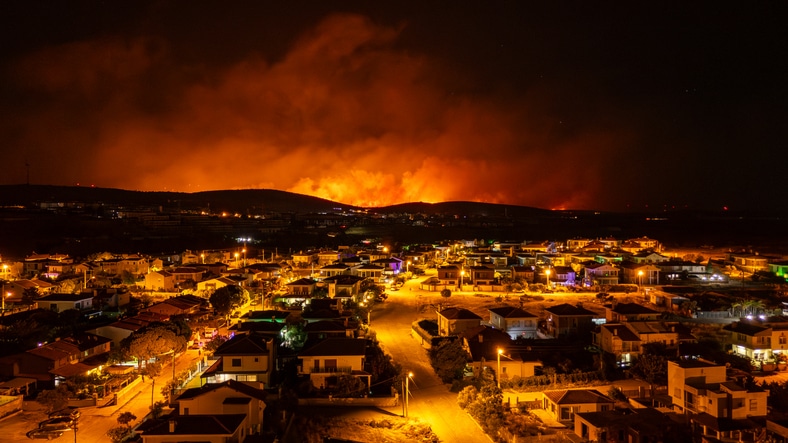
Wildfires generated some of the most significant losses in 2025. The Los Angeles wildfires alone resulted in approximately $40 billion in insured losses, marking the largest wildfire loss event on sigma records.
Severe convective storms also remained a major contributor, producing $51 billion in insured losses globally. This made 2025 the third-costliest year on record for these events, following 2023 and 2024 when adjusted to 2025 prices.
Flood-related insured losses totaled $3.4 billion, which is well below the previous five-year average of $15.4 billion. The year also stood out due to the absence of a major U.S. hurricane landfall.
Exposure Growth Continues to Drive Losses
Swiss Re data indicates that exposure growth has been a primary driver of long-term insured loss increases. Between 1970 and 2025, more than 80% of the rise in global weather-related insured losses is attributed to increased exposure.
Several factors contribute to this trend. Population growth, rising asset values, and higher reconstruction costs continue to increase the value of assets in risk-prone areas. As a result, losses remain elevated even in years with fewer large-scale events.
Regional trends show varying drivers of loss growth. In North America, wildfire and severe convective storm losses are increasing, with wildfire losses growing at an annual rate of 14%. In Europe, more than half of insured loss growth is linked to severe convective storms, which are increasing at an estimated annual rate of 10%. In Asia, floods are the dominant secondary peril, while in Oceania and Australia, losses are more evenly split between storms and floods.
Although tropical cyclones remain the largest contributor to overall long-term average losses, severe convective storms account for the largest share of historical insured loss growth at 38%. Wildfires contribute about 20%, and floods account for roughly 10%.
Additional Risk Drivers Emerging
The report notes that exposure alone does not fully explain the pace of loss growth in some regions. Hazard intensification and evolving vulnerability are becoming increasingly significant.
In North America, longer fire seasons and changes in temperature and precipitation patterns are increasing wildfire risk. In Europe, less than half of the increase in severe convective storm losses can be attributed to exposure growth, suggesting additional factors such as changing storm characteristics and shifting vulnerability.
Economic Losses and Protection Gaps
Global economic losses from natural catastrophes totaled $220 billion in 2025. Of that amount, 49% was insured, representing the highest share recorded in sigma reports.
Despite this, protection gaps remain substantial, particularly in emerging markets where 80% to 90% of catastrophe losses are typically uninsured. The data highlights the continued role of insurance in covering losses, while also pointing to areas where coverage remains limited.
Outlook Based on Modeled Scenarios
Swiss Re modeling indicates that insured losses could increase in the near term. If losses return to long-term averages, they could reach $148 billion in 2026. In a peak-loss scenario, insured losses could rise to approximately $320 billion.
The report attributes this potential increase to continued exposure growth and the structural nature of rising insured losses.
Get the latest insurance market updates and discover exclusive program opportunities at ProgramBusiness.com.