











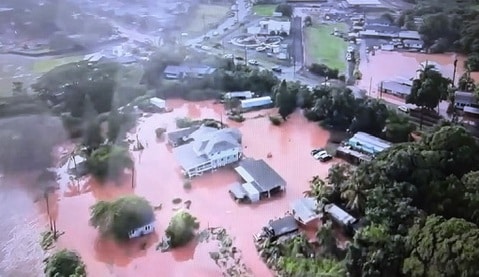
Severe flooding across Hawaii in March 2026 has led to emergency evacuations, infrastructure damage, and projected losses reaching up to $1 billion. Authorities describe the event as the most significant flooding the state has experienced in the past 2 decades.
Back-to-back Kona storms brought intense rainfall, strong winds, and widespread disruption across the islands. A statewide flood watch remained in effect through the afternoon of March 22 as conditions continued to develop.
Emergency Evacuations and Dam Risk
On March 20, officials ordered evacuations in parts of northern Oahu due to concerns about the Wahiawa Dam. The Hawaii Emergency Management Agency reported that the 120-year-old structure had not failed but was at imminent risk of failure.
Evacuation orders affected Haleiwa and Waialua. Alerts warned that all roads out of the area were at risk of imminent failure and urged residents to leave immediately.
The Wahiawa Dam, built in 1906 and used primarily for irrigation, is privately owned and classified as having a high hazard potential. It is also considered to be in poor condition. Oahu has 13 dams, seven of which are classified as having high or significant hazard potential.
Assembly areas were established for evacuees and for those unable to return home.
Rainfall and Flood Conditions
The National Weather Service reported that two storm systems continued to drive heavy rain, thunderstorms, and flash flooding risks across the islands. Rainfall rates reached 2 to 4 inches per hour in some areas.
Forecasts called for up to 10 inches of additional rainfall on Oahu between March 20 and the morning of March 23.
Floodwaters rose rapidly in several locations. The Kaukonahua Stream near Wailua increased by more than 10.5 feet on March 20. In another incident, one foot of water flowed over a road east of Waialua, inundating vehicles and homes. Emergency crews transported civilians using a bulldozer.
Impact on People and Property
Gov. Josh Green confirmed that no deaths or missing persons had been reported as of March 20. However, approximately 200 people required rescue, and about 10 individuals were treated for hypothermia.
Floodwaters caused extensive damage across multiple sectors. A home in Mokuleia was swept onto the beach during a flash flood, with reports indicating the structure split and partially collapsed. In Makaha Valley, a road collapse sent vehicles over the edge, forcing a full closure.
Damage estimates include impacts to homes, roads, schools, airports, and a hospital on Maui. Total losses could reach $1 billion, according to state officials.
Kona Storm Activity
The flooding resulted from a series of kona storms, which are winter cyclones that typically affect Hawaii’s leeward sides. These storms form from low-pressure systems and can bring heavy rainfall to areas usually sheltered from the trade winds.
Meteorologists note that Hawaii typically experiences one to two kona storms during the November to March season. However, two storms forming within the same month and within a week are considered rare.
The first storm system affected the islands from March 10 through March 16, producing local rainfall totals exceeding 4 feet.
Comparison to 2004 Flooding
Officials compared the March 2026 flooding to the October 30, 2004, Manoa Flood, the most significant flooding event in recent decades.
During the 2004 event, rainfall peaked at 1.29 inches in 15 minutes and 8.71 inches over six hours. Manoa Stream overflowed, sending floodwaters through residential areas and the University of Hawaii at Manoa campus. The flooding destroyed documents and damaged laboratory facilities.
That event caused approximately $85 million in damage and impacted around 120 homes. No deaths or injuries were reported.
Ongoing Monitoring
Authorities continue to monitor rainfall, water levels, and infrastructure conditions as storm activity persists. Flood watches and emergency alerts remain in place as officials assess risks to communities and critical systems across the islands.
Stay informed and ahead of the curve — explore more industry insights and program opportunities at ProgramBusiness.com.