
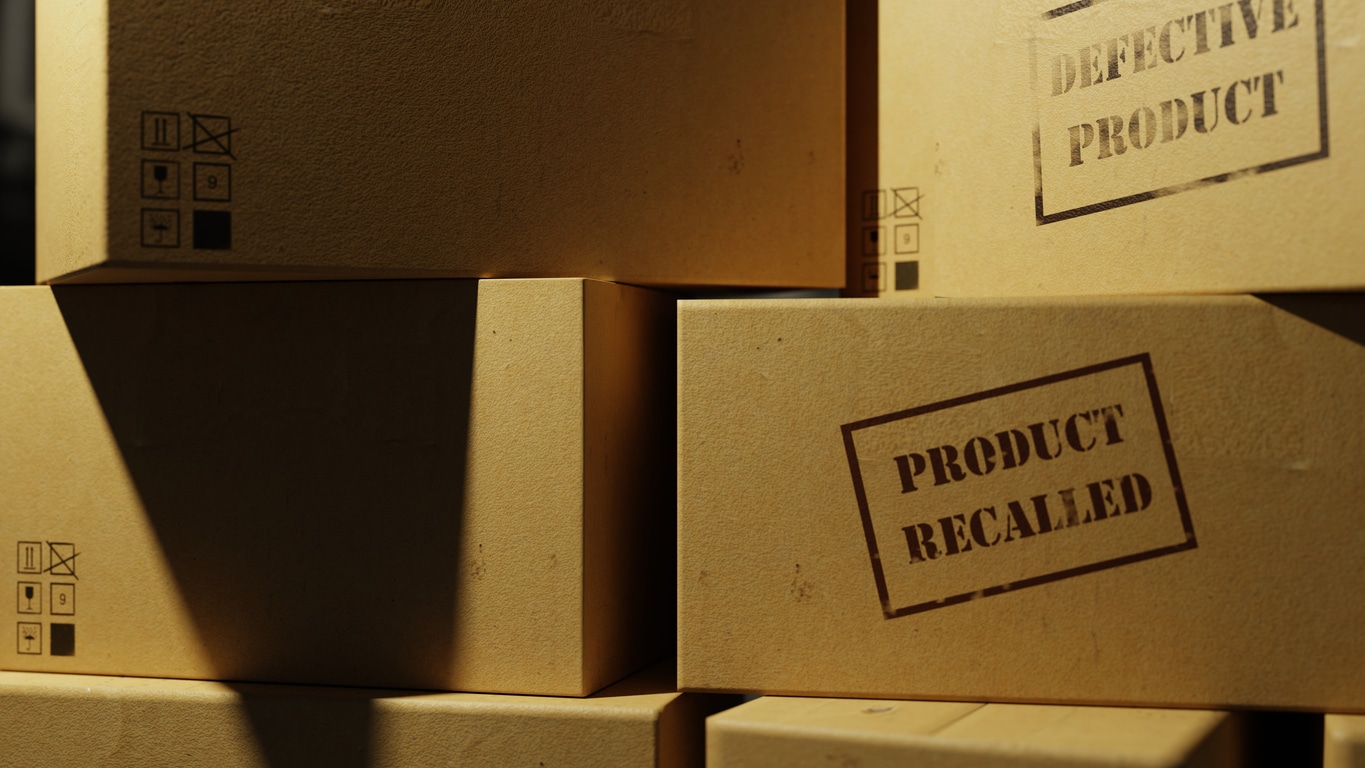
Product recalls have become a defining risk of modern manufacturing and distribution. From contaminated food products to defective auto components, recall events can cost millions in direct expenses, lost revenue, and brand damage. As companies face mounting regulatory pressure and increasingly complex global supply chains, demand for product recall insurance continues to climb on ProgramBusiness.com.
This coverage is designed to protect manufacturers, distributors, and retailers from the financial and operational fallout of withdrawing unsafe or contaminated products from the market — a crisis that can unfold in hours and ripple across entire industries.
For more insights on trending markets, see parts 1 through 4 in this series, featuring builders risk, auto dealers, transportation, and habitational insurance programs.
What Is Product Recall Insurance?
Product recall insurance covers the costs associated with removing defective or contaminated products from circulation. While product liability insurance addresses third-party bodily injury or property damage, recall coverage focuses on the recall process itself — the logistics, communication, and recovery costs tied to getting the product off shelves and restoring public trust.
Typical coverages include:
- Notification, shipping, and disposal costs
- Replacement or repair of affected goods
- Business interruption and loss of profits
- Public relations and crisis management support
- Consultant fees and recall execution services
- Government-mandated recall expenses
Modern recall programs often integrate 24/7 crisis response teams and brand rehabilitation services, giving policyholders immediate access to specialists who can coordinate a recall and minimize reputational damage.
What To Look For in Product Recall Insurance Programs
When evaluating recall programs, brokers should prioritize product recall insurance programs that offer:
- Industry specialization in food, manufacturing, aviation, or life sciences
- Crisis management partners available on call
- Coverage for both voluntary and government-mandated recalls
- Integration with product liability coverage for seamless protection
- Global capabilities to handle international supply chain exposures
- Dedicated underwriting for contamination and defect risk
ProgramBusiness.com enables brokers to compare recall and contamination markets, assess appetite, and connect directly with underwriters offering specialized coverage.
Top Product Recall Insurance Programs To Consider
Brokers are increasingly searching for recall markets that can respond swiftly to emerging contamination, defect, or component-failure incidents. The following programs on ProgramBusiness.com represent key options available to brokers managing high-exposure manufacturing and product risks.
DUAL North America — Crisis Management (Product Recall & Product Contamination)
Whether accidental or intentional, product contamination can devastate a company’s finances and reputation. DUAL North America’s Contaminated Products Insurance, underwritten by the DUAL Crisis Management team, is designed to help manufacturers, wholesalers, retailers, importers, and distributors of food and beverage and other topical or ingestible products manage these events.
Key features include:
- Worldwide coverage for contaminated product incidents
- 24/7 crisis support through DUAL-retained consultant Crisis24, accessible via a dedicated response hotline
- Pre-incident consulting to strengthen contamination prevention and recall readiness
- Primary and excess capacity for flexible risk transfer solutions
- Dedicated claims management backed by strong carrier partnerships
- Minimum self-insured retention (SIR) of $5,000
DUAL’s program offers a full-service crisis management solution — from pre-loss preparation to real-time response — enabling insureds to minimize disruption and protect brand integrity.
Program listing: Dual North America — Crisis Management (Product Recall & Product Contamination)
USG Insurance Services — Aviation Program
The Aviation Program from USG Insurance Services provides specialized protection for aviation businesses and manufacturers facing complex liability and recall exposures. Designed for both operational and manufacturing risks, the program covers everything from pleasure aircraft to aerospace products.
Targeted classes include:
- Pleasure and business aircraft
- Flight schools and charter operations
- Helicopters and fixed base operations
- Airport and heliport liability
- Aviation products and manufacturers
- Space satellites and aerial applications
Coverages include:
- Product recall expense
- Products and completed operations liability
- Aviation product liability
- Environmental and pollution liability
- Aircraft hull and liability (individual and corporate-owned)
- Airport liability and workers’ compensation
Program features:
- “A”-rated admitted paper
- Worldwide coverage
- Binding authority for quick access to markets
USG’s aviation offering gives brokers access to a specialized market with global reach. It supports manufacturers and operators where even minor product defects can lead to large-scale recall or grounding events.
Program listing: USG Insurance Services — Aviation Program
USG Insurance Services — Products Liability Insurance
USG Insurance Services also offers a Products Liability Insurance Program tailored for manufacturers, distributors, and importers across a wide range of industries. The program provides protection for third-party injury and property damage caused by defective products, along with coverage for product recall expenses and related crisis costs.
Targeted classes include:
- Product recall
- Discontinued operations
- Domestic and foreign flow
- Reverse flow
- Sporting gear and helmets
- Auto parts and chemicals
- Toys, food, pharmaceuticals, and medical products
Key features:
- Coverage for product recall expense
- Access to admitted and non-admitted markets nationwide
- Binding authority for efficient placement
- Capacity for both U.S. and international exposures
Built for versatility, USG’s program helps brokers place complex manufacturing, consumer goods, and industrial accounts that demand robust product liability and recall protection.
Program listing: USG Insurance Services — Products Liability Insurance
Related Markets To Watch
Beyond recall programs, several related markets offer coverage extensions or appetite for contamination and crisis exposures. Brokers on ProgramBusiness.com can explore additional opportunities through programs targeting manufacturing, food processing, or life sciences — sectors most frequently impacted by recall incidents.
These complementary programs often include sublimits or endorsements for recall expenses, contingent business interruption, and crisis communication costs.
Market Trends Driving Product Recall Insurance in 2025
The scale of U.S. product recalls remains historically high, underscoring the growing need for recall and contamination coverage. According to Sedgwick Brand Protection’s 2025 U.S. State of the Nation Recall Index, more than 3,200 recall events were recorded in 2024 for the second consecutive year — marking the second-highest annual total in six years.
While the number of defective units recalled fell to 680.9 million, the overall frequency of recall incidents continues to keep pressure on manufacturers, distributors, and insurers alike. This sustained activity highlights how recall exposures are evolving across industries and why brokers are seeking programs that combine rapid crisis response with strong financial protection.
Increased Regulatory Oversight
Federal agencies continue to intensify recall monitoring and enforcement, contributing to a persistently high volume of product withdrawals. The Food and Drug Administration now tracks thousands of recalls each year, spanning categories ranging from mislabeled food allergens to contaminated pharmaceuticals. Recent examples include:
- Recalls of frozen shrimp linked to cesium-137 contamination
- Cucumbers and dairy products tied to salmonella and listeria outbreaks
- Frozen pasta meals pulled due to foodborne pathogens
This broader oversight under regulations such as the Food Safety Modernization Act and National Highway Traffic Safety Administration laws has increased expectations for transparency and traceability. Companies must now disclose risks faster, coordinate public notifications, and cooperate with investigations.
Overall, there’s a heightened need for recall insurance programs that pair financial protection with experienced crisis management and communication support.
Global Supply Chain Interdependence
Modern product manufacturing depends on complex global supply chains where a single defective part or contaminated ingredient can ripple across multiple brands and countries. The largest recalls in recent decades illustrate this fragility.
The 2009 Peanut Corporation of America salmonella outbreak, for example, affected more than 700 people and led to recalls of hundreds of products from major brands like Smucker’s and Peter Pan. Similarly, the Takata airbag crisis triggered nearly 100 million recalls worldwide, spanning vehicles from more than a dozen automakers.
These events reveal how interconnected suppliers, contract manufacturers, and distributors are — and how a localized problem can quickly become a global crisis. For brokers, that means recall insurance must account for exposures well beyond a single manufacturer. Programs offering international jurisdiction, supplier-extension coverage, and coordinated crisis response are increasingly critical to protecting clients whose products move through multi-tiered production networks.
Technological Failures
Battery-related recalls are surging as lithium-ion technology becomes common in everyday products. The Consumer Product Safety Commission reported more than 150 fires and thermal incidents tied to “universal” chargers for e-bikes and scooters in early 2024, with some manufacturers refusing to issue recalls.
Faulty chargers, poor assembly, and design flaws that cause batteries to overheat have also led to recalls across electronics, power tools, and medical devices. As battery use expands, even small defects can lead to major losses — making specialized recall coverage essential for manufacturers in micromobility and electronics sectors.
Brand and Reputational Risk
In today’s media environment, a single recall can go viral within hours. Companies face heightened public scrutiny as social media amplifies negative publicity, sometimes long before a recall is officially announced.
With trust in many institutions declining, businesses can’t afford the reputational risk that comes with a major recall. Product recall insurance with built-in crisis communication and public relations response has become indispensable.
Many modern programs provide 24/7 access to brand rehabilitation experts who help craft messaging, coordinate media response, and restore consumer confidence — often making the difference between short-term disruption and long-term damage.
Searching for Product Recall Insurance Solutions?
Product recall insurance remains one of the most vital specialty lines for manufacturers and distributors seeking to protect their brands, customers, and bottom lines. Brokers can use ProgramBusiness.com to identify recall programs, compare appetites, and connect directly with experienced underwriters who understand the urgency of these exposures.
Contact us to set up your storefront on ProgramBusiness.com.
FAQ About Product Recall Insurance Programs
What does product recall insurance cover?
It covers the costs of withdrawing defective or contaminated products from the market, including notification, shipping, disposal, and crisis management expenses.
Who needs product recall insurance?
Manufacturers, distributors, and retailers across food, consumer goods, automotive, aviation, and life sciences industries need it to protect against costly recall events.
How is product recall insurance different from product liability insurance?
Product liability covers third-party injury or damage, while recall insurance covers the cost of removing unsafe or defective products from the marketplace.
How much does product recall insurance cost?
Premiums depend on industry, product type, production volume, and recall history. High-risk industries such as food and automotive may face higher rates.
What industries face the highest recall risk?
Food and beverage, automotive, electronics, pharmaceuticals, and consumer goods — sectors with complex supply chains and tight regulatory oversight.
About ProgramBusiness
ProgramBusiness is a leading insuretech marketplace connecting agents, brokers, MGAs, and carriers. We enable professionals to list their specialty programs, receive verified feedback, and be discovered by motivated buyers across the industry.
 Larry Neilson
With 35 years in the Property/Casualty insurance industry under his belt, Larry has helped insurance agents, carriers, MGAs/MGUs, wholesalers, program administrators, and vendors capitalize on the latest in sales and marketing, data development, Internet marketing, SEO, email marketing, and social media distribution.