











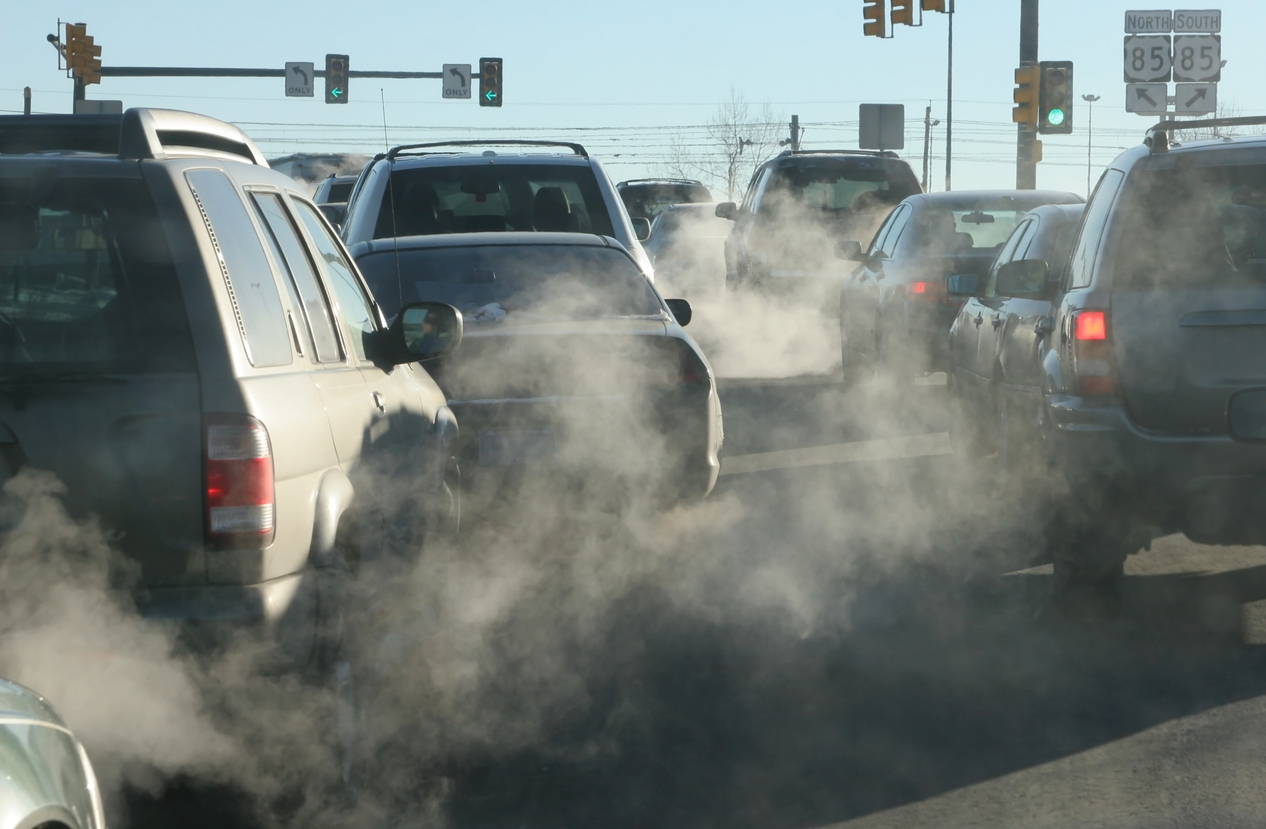
The reintroduction of one of California's most powerful environmental prerogatives could have a significant impact on the types of cars Americans drive in the coming decade, the amount of gasoline the country consumes, and the country's ability to reduce tailpipe emissions, which contribute significantly to climate change.
California, as the most populous state and the world's fifth-largest economy, has been able to influence automakers and set the pace for the rest of the country. The California rules have been adopted by seventeen other states and the District of Columbia, making them de facto national standards. Twelve other states have agreed to follow California's lead and sell only zero-emission vehicles after 2035.
With that leverage, California's actions become critical to Mr. Biden's broader push to accelerate the transition from gasoline-powered vehicles to electric vehicles, which do not require oil and emit no emissions.
"Today, we proudly reaffirm California's longstanding authority to lead in addressing pollution from cars and trucks," said EPA Administrator Michael S. Regan. "Our collaboration with states to address the climate crisis has never been more critical." With today's action, we reintroduce an approach that has for years aided in the advancement of clean technologies and the reduction of air pollution for people not just in California, but across the country."
California's leaders say they plan to write an auto pollution rule that will phase out internal combustion engines in favor of zero-emission batteries.
"I thank the Biden Administration for righting the Trump administration's reckless wrongs and recognizing our decades-old authority to protect Californians and our planet," said Democratic Gov. Gavin Newsom, adding that the move "comes at a pivotal moment underscoring the need to end our reliance on fossil fuels." California is eager to collaborate with the Biden Administration to make a zero-emission future a reality for all Americans."
Electric vehicles account for only 4% of new car sales in the United States today.
The moves come as many of the world's largest automakers, which have long opposed federal regulations aimed at reducing tailpipe pollution, have publicly embraced an electric-vehicle-based future.
"Automakers are committed to working cooperatively and constructively with California and other states to ensure vehicles are efficient, clean, and affordable for all," said John Bozzella, president of the Alliance for Automotive Innovation, which represents more than a dozen automakers including Ford, General Motors, Stellantis, Toyota, and Volvo. "Collaboration at all levels of government will be critical to achieving our shared goals for a cleaner transportation future that benefits all communities and boosts U.S. economic competitiveness."
During the Trump administration, five automakers — Ford, Honda, BMW, Volkswagen, and Volvo — signed a deal with California in which they voluntarily agreed to continue adhering to the state's stricter emissions standards, despite the fact that Mr. Trump had removed California's authority to enforce them.
Mr. Trump's decision in 2019 to revoke California's ability to set its own limits on tailpipe emissions was one of his most significant moves to demolish climate change policies. Vehicle regulation is critical to combating climate change: transportation is the single largest source of greenhouse gases produced in the United States, accounting for 29 percent of total emissions.
According to a recent International Energy Agency report, nations would need to stop selling new gasoline-powered cars by 2035 in order to keep average global temperatures from rising 1.5 degrees Celsius above levels seen during the Industrial Revolution. That is the point at which scientists believe the Earth will suffer irreversible damage. Since the late 1800s, the Earth has warmed by an average of 1.1 degrees Celsius.
In order to address its smog problem, Congress granted California authority under the 1970 Clean Air Act to set tailpipe standards stricter than federal limits.
President Barack Obama established federal auto emissions standards based on the California rule in 2009, requiring passenger vehicles to achieve an average mileage of 51 miles per gallon by 2025, up from around 38 miles per gallon at the time.
Those rules put the auto industry on track to aggressively ramp up electric vehicle production by 2025, until Mr. Trump repealed them in 2020. "The Trump administration is revoking California's Federal Waiver on emissions in order to produce far less expensive cars for the consumer, while also making the cars significantly SAFER," he wrote on Twitter. He claimed that the change would result in increased auto production and new "JOBS, JOBS, JOBS," and that newer cars would be "extremely environmentally friendly."
Mr. Newsom said last month of his fight with Mr. Trump over the waiver, "There was no more important fight for us, in terms of addressing climate change." You can't be serious about climate change unless you completely transform the transportation sector."
Mr. Biden enacted a federal standard late last year that effectively reinstated and slightly strengthened the Obama-era auto pollution rule. By 2026, new vehicles must achieve an average fuel economy of 55 miles per gallon. According to the E.P.A., this is intended to prevent the release of 3.1 billion tons of climate-warming carbon dioxide by 2050. It would also prevent the burning of approximately 360 billion gallons of gasoline, resulting in a 15% annual reduction in the nation's gasoline consumption by 2050.
Mr. Biden has set a goal of having half of all new vehicles sold in the United States be electric by 2030. To that end, the E.P.A. is developing a new tailpipe emissions rule, which will most likely be influenced by the upcoming California rule.
"This is massive," said Margo Oge, an electric vehicle expert who led the E.P.A.'s Office of Transportation and Air Quality from 1994 to 2012. "For the past 50 years, California has set the standard for cleaner cars and trucks." This reinforces California's leadership and moves the state closer to implementing the California order that all cars sold in the state be electric vehicles by 2035. And it strongly supports Biden's car standards and his executive order mandating that half of all cars sold in the United States be electric vehicles by 2050. It is extremely beneficial."
With coordinated lawsuits against each of Mr. Biden's policies, fossil fuel companies and Republican states are expected to fight back against all new rules designed to reduce oil use and promote electric vehicles.
"States that do not believe they should be forced into the worldview of the state of California would be the primary litigants," said Thomas Pyle, president of the Institute for Energy Research, a pro-fossil-fuels organization.
Last month, the Republican attorneys general of 15 states filed a lawsuit against the Biden administration's reinstatement of the Obama-era auto pollution rule, claiming that it exceeded the federal government's constitutionally granted authority. The group is expected to try to stymie any new regulations that would reduce demand for oil or promote electric vehicles.
"At a time when American gas prices are skyrocketing at the pump, and the Russia-Ukraine conflict demonstrates the absolute need for energy independence, Biden chooses to go to war against fossil fuels," said Texas Attorney General Ken Paxton, who led the lawsuit against Biden's new auto rules. "The E.P.A.'s harsh new rules are not only unnecessary, but they will intentionally disadvantage Texas and all states involved in the production of oil and gas." I will not let federal overreach devastate our economy or the livelihoods of hardworking Texans."