











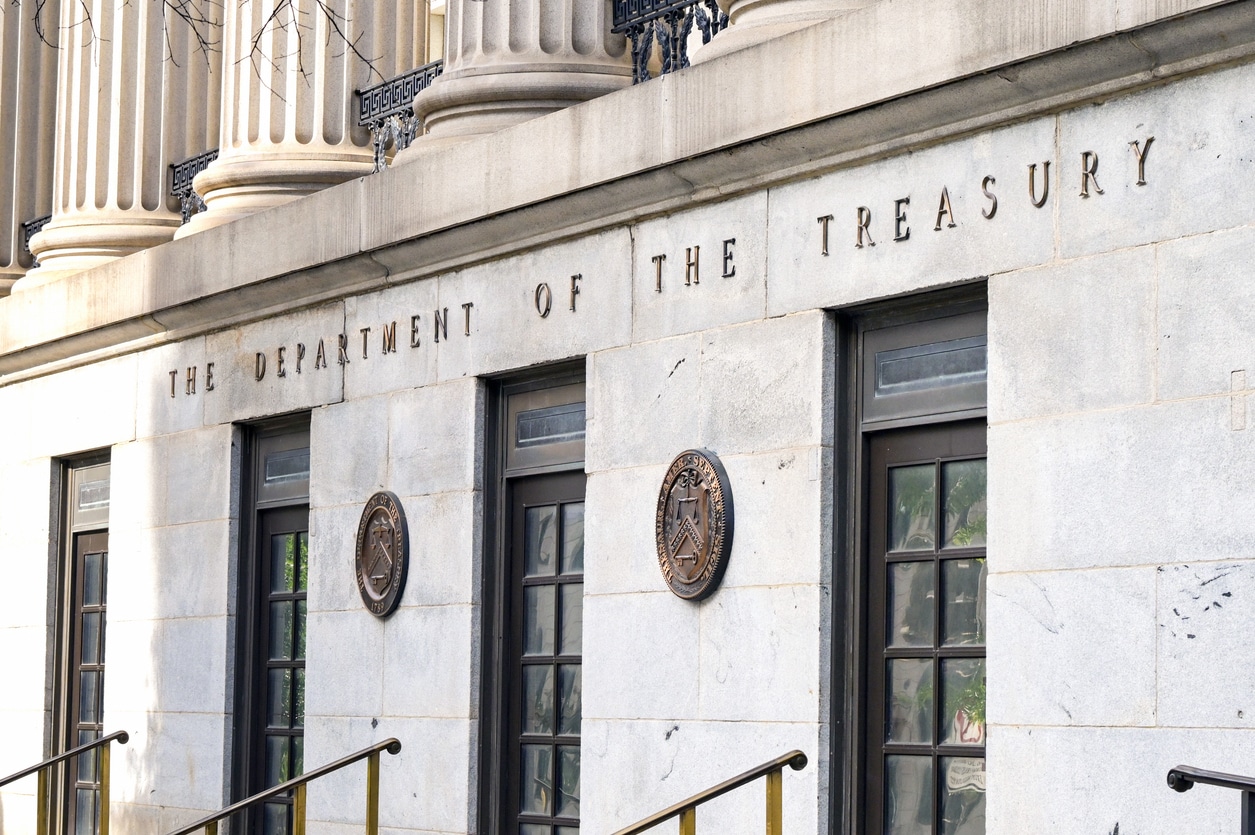
The Federal Insurance Office (FIO) of the U.S. Department of the Treasury has released its Annual Report on the Insurance Industry, completed in accordance with the Dodd-Frank Wall Street Reform and Consumer Protection Act. The report provides a detailed analysis of the insurance sector’s financial performance during 2024, including the life and health (L&H) and property and casualty (P&C) sectors, as well as developments in capital markets, residential insurance, and global insurance trends.
Financial Overview
The U.S. insurance industry achieved record results in 2024, with direct written premiums totaling $3.3 trillion across all sectors. The industry’s overall surplus rose, reflecting stronger financial stability and flexibility. Higher interest rates throughout the year supported gains in net investment income, as insurers reinvested at higher yields.
Industry performance also translated to the stock market—an index of life and health insurers slightly underperformed the S&P 500, while property and casualty stocks outperformed the broader market.
Life and Health (L&H) Sector
The life and health sector recorded strong premium growth across its major business lines—life insurance, annuities, and accident and health products. Consumer demand remained high for savings-oriented products such as registered index-linked annuities (RILAs), fixed indexed annuities (FIAs), and traditional variable annuities.
Reinsurance activity remained steady compared to 2023, though offshore cessions continued to rise. Higher interest rates contributed to an uptick in policy surrender activity and increased reserves, which led to lower operating income. However, stronger investment income and reduced realized capital losses helped maintain growth in the sector’s capital and surplus, though at a slower pace.
Property and Casualty (P&C) Sector
The P&C sector also experienced a record-setting year for direct premiums written, marking the third consecutive year of annual growth exceeding 10 percent. Commercial multi-peril business lines benefited from both economic expansion and rate increases.
Despite challenges—including higher catastrophic losses, inflationary pressures, rising reinsurance costs, and regulatory factors—the sector saw a sharp improvement in underwriting profit and net income. These gains were further supported by increases in investment income and realized capital gains.
Capital Markets Activity
Insurers continued to rely on the capital markets to support growth and strengthen balance sheets. Debt remained the primary financing method, even amid higher interest rates. Alternative risk transfer mechanisms—such as insurance-linked securities—also remained popular funding tools.
Residential Insurance Developments
The report identified several factors influencing residential insurance costs, including rising replacement and construction expenses, higher reinsurance rates, and population shifts toward disaster-prone areas. Natural catastrophes, regulatory conditions, and litigation-related costs also contributed to pricing pressures.
Many states offer incentive programs to encourage homeowners to improve structural resilience, including premium discounts, tax deductions, and retrofit grants. However, affordability and availability issues continue to challenge state-run residual market programs, which act as insurers of last resort in 34 states and the District of Columbia.
International Insurance Overview
The United States retained its position as the world’s largest single-country insurance market, accounting for 45 percent of total global direct premiums at the end of 2024. Globally, inflation-adjusted direct written premiums rose by 5 percent, with emerging markets once again outpacing advanced economies for the third straight year.
The full Federal Insurance Office Annual Report on the Insurance Industry (September 2025) provides a comprehensive analysis of these findings and trends.
Stay informed and ahead of the curve — explore more industry insights and program opportunities at ProgramBusiness.com.