











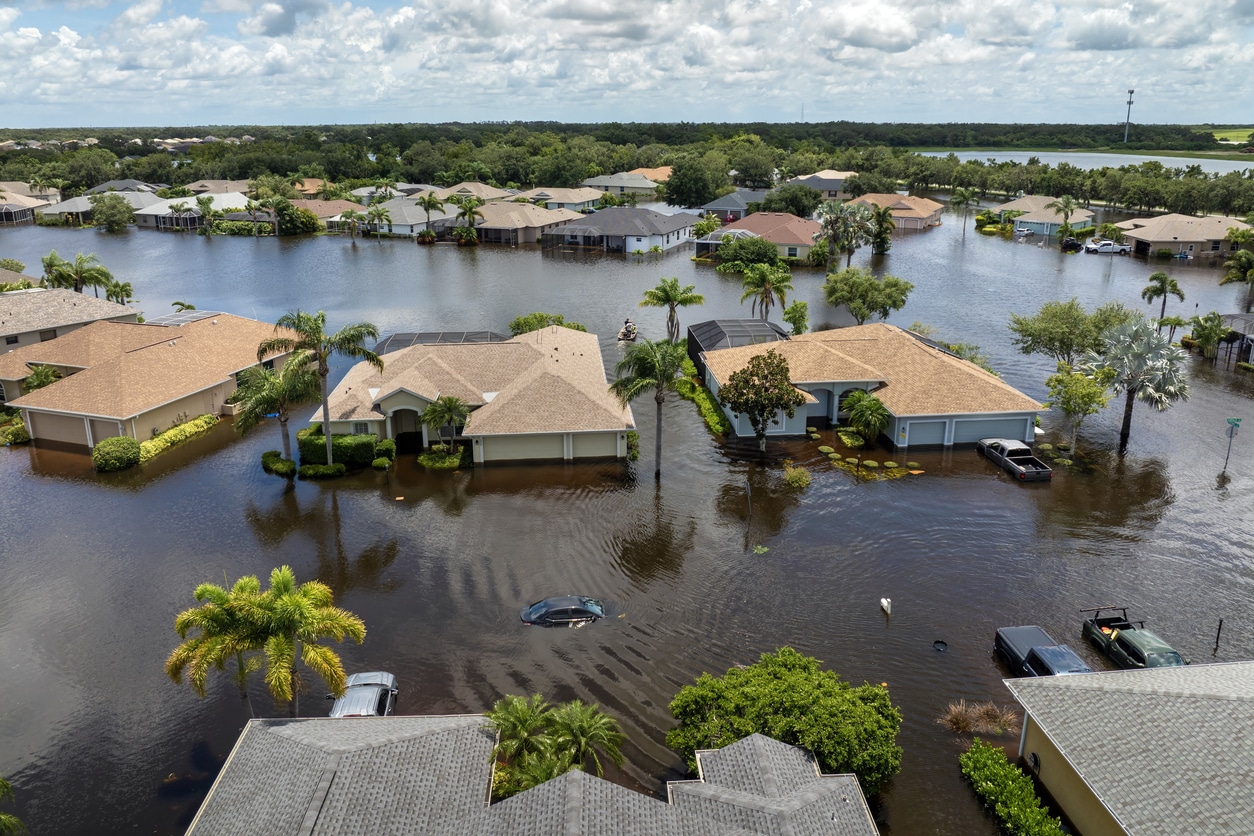
Chubb has released its 2026 Flood Risk and Resilience Survey, a new report examining how flood risk has changed and how those changes are being understood and addressed across the insurance landscape. Based on responses from more than 1,500 high-net-worth homeowners, commercial businesses, agents, and brokers, the survey highlights persistent gaps between actual flood exposure and how that exposure is perceived, insured, and mitigated.
Not long ago, severe flood damage was most often associated with hurricane storm surge or properties located near oceans, rivers, or other bodies of water. According to the report, that framework no longer reflects current conditions. Flooding linked to intense rainfall events now affects a much broader range of geographies. As a result, any location that receives rainfall can experience significant flooding.
Despite this shift, the survey finds that awareness has not fully translated into recognition of personal or operational risk. While many respondents acknowledge that flood risk is increasing overall, they do not necessarily see their own homes or businesses as vulnerable.
Key Findings From the Survey
The report organizes its findings around three primary gaps that influence how effectively properties are protected.
The first is the awareness gap. Homeowners and commercial businesses generally recognize that flood risk is growing. However, many still place themselves outside perceived high-risk areas, even as flooding becomes more frequent and severe due to intense rainfall.
The second is the coverage gap. The survey identifies widespread misconceptions about insurance coverage, particularly the belief that flood damage caused by natural disasters is covered under standard homeowners or commercial property policies. The report emphasizes that flood insurance must almost always be purchased separately and remains a critical component of financial protection against flood-related losses.
The third is the information action gap. Although new tools, technologies, and mitigation strategies are increasingly available, the survey finds that many property owners are not taking steps to implement them. This includes both physical mitigation measures and the use of data-driven or expert-led risk management resources.
Representative Profiles in the Report
To illustrate how these gaps manifest in practice, the report introduces three representative individuals whose experiences reflect current challenges in flood risk.
Maria Flores is an independent residential insurance agent serving high-net-worth clients, many of whom own second homes. Her profile reflects the challenge of helping clients fully understand the level of flood risk they face, particularly when properties are located outside traditionally defined flood zones.
James Harrison is a Florida homeowner with a beachfront property that faces high flood exposure. His profile highlights the role of flood insurance and specialized risk engineering services in managing vulnerability for properties with known exposure.
David Chen is a risk manager for a large data center. His concerns center on extreme weather events, especially intense rainfall, and the potential for property damage and business interruption affecting both his facility and its clients.
Topics Explored in the Report
The survey report is structured around three core areas.
The first examines flood risk awareness and understanding. It notes that floods are increasing in frequency and severity, driven largely by more intense rainfall events, while many property owners continue to underestimate their exposure.
The second section focuses on perceptions of flood insurance and purchasing behavior. It reinforces that flood insurance is the primary mechanism for protecting against flood losses and underscores the importance of clear communication about what it covers and why it is necessary.
The final section addresses planning, prevention, and intervention. The report outlines resilience measures that contribute to comprehensive flood risk management, including physical barriers, advanced modeling, sensor technology, and tailored risk consulting services.
Chubb’s 2026 Flood Risk and Resilience Survey presents a detailed look at how flood risk has shifted, how it is currently perceived, and how protection strategies are being applied across residential and commercial markets.
Get the latest insurance market updates and discover exclusive program opportunities at ProgramBusiness.com.