











Why Infrastructure Resilience Matters
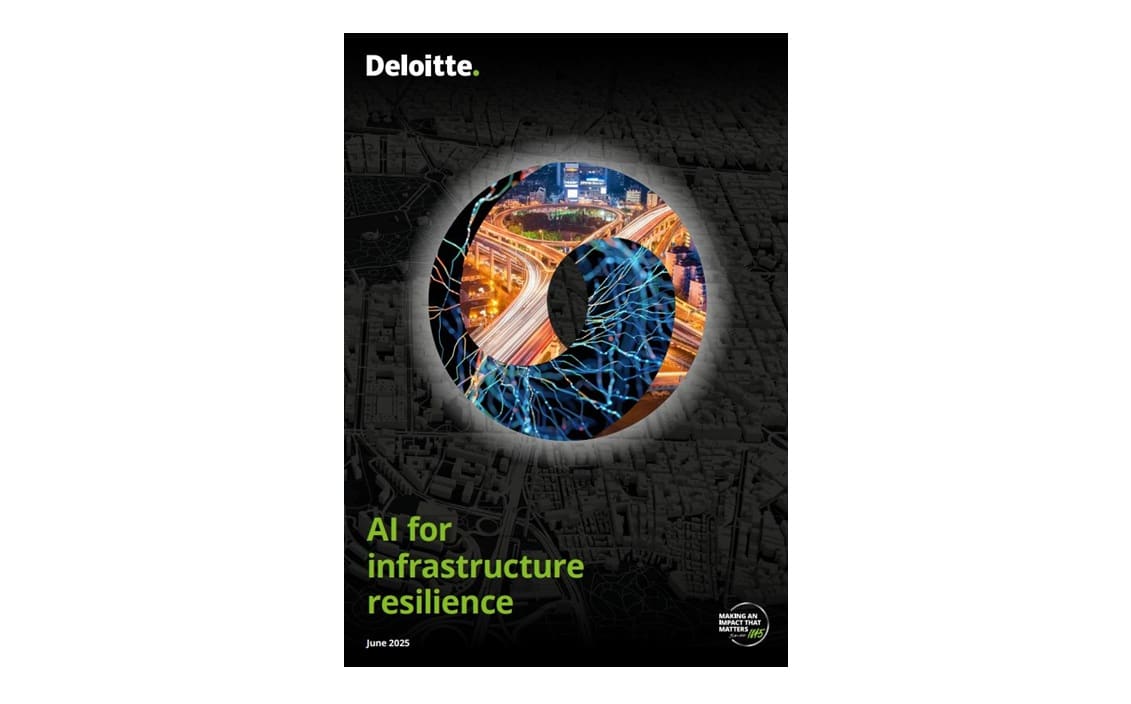
Infrastructure is the backbone of modern society, delivering essential services such as water, energy, transportation, and healthcare. Yet, these systems are under increasing stress from rapid urbanization, population growth, and climate change. Deloitte’s report highlights a sobering projection: natural disasters are expected to cause $460 billion in annual global infrastructure losses by 2050 — more than double today’s average of $200 billion.
The solution lies in building resilient infrastructure — systems designed to withstand shocks, recover quickly, and adapt to future risks.
How AI Can Strengthen Infrastructure
The report identifies three key phases of resilience — planning, response, and recovery — and details how AI can play a role in each:
- Planning (Prevent): Machine learning models can analyze risks, simulate disaster scenarios, and guide smarter design choices — like flood-resilient structures or fire-resistant materials.
- Response (Detect and React): AI-powered early warning systems and real-time monitoring can detect hazards sooner and optimize emergency response strategies.
- Recovery: Predictive assessments and resource optimization tools can speed up damage evaluations and repairs, minimizing downtime and economic disruption.
Real-world examples include digital twins for disaster simulations, AI-enabled predictive maintenance for renewable energy infrastructure, and wildfire detection systems capable of saving hundreds of millions of dollars in damages.
The Potential Economic Impact
Deloitte estimates that AI-powered resilience solutions could reduce direct disaster costs by $70 billion annually by 2050 — with savings climbing above $110 billion as AI capabilities advance. Every dollar invested in resilience can return up to $50 in avoided damages — a powerful case for integrating AI into future infrastructure systems.
Overcoming Barriers to Adoption
Despite its potential, scaling AI for resilience faces challenges. These include:
- Limited access to high-quality, diverse datasets
- Upfront investment costs with delayed returns
- Evolving regulatory frameworks and cybersecurity risks
- A shortage of skilled professionals and institutional resistance
Addressing these barriers will require collaboration across governments, infrastructure operators, financial institutions, insurers, technology providers, and engineering firms.
A Call to Coordinated Action
The report emphasizes that no single stakeholder can achieve infrastructure resilience alone. Policymakers must shape enabling environments, infrastructure owners should embed AI across operations, financial institutions can unlock new funding models, and insurers can innovate coverage for AI-enabled systems. Technology and engineering partners will be critical in turning AI’s promise into practical, scalable solutions.
Final Takeaway
Deloitte’s AI for Infrastructure Resilience report makes it clear: AI is not just a tool for efficiency — it is an essential ally in building safer, smarter, and more sustainable infrastructure systems. With coordinated action, AI can help societies prepare for the disruptions of tomorrow while safeguarding lives, livelihoods, and economies today.
Get the latest insurance market updates and discover exclusive program opportunities at ProgramBusiness.com.