











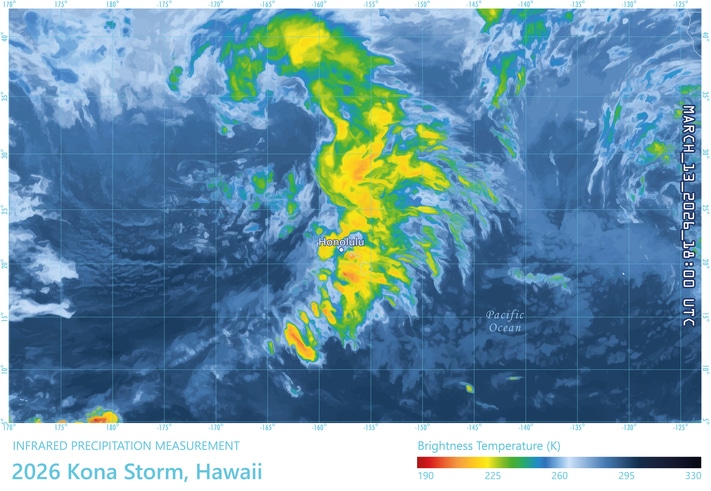
Back-to-back Kona storms that impacted Hawaii between March 10 and March 24 have resulted in total economic and insured losses of at least $1 billion, according to Aon’s weekly catastrophe report, citing state officials.
The storms produced extreme rainfall and widespread flooding across much of the state. Aon noted that loss estimates remain preliminary and could rise in the coming weeks and months as additional damage assessments are completed.
Agricultural Losses Contribute to Total Damage
Aon’s report includes significant agricultural impacts within the overall loss estimate. Recent surveys identified more than $9.4 million in farmland damage across the state. Of that total, more than $2.7 million occurred on O‘ahu alone.
These figures reflect early assessments, and further evaluations may lead to higher reported losses.
O‘ahu Among Hardest-Hit Areas
O‘ahu experienced some of the most severe impacts, particularly in northern regions such as Waialua and Haleiwa. Flash flooding and landslides damaged hundreds of homes, agricultural areas, and roadways.
The storms also affected critical infrastructure, including schools, hospitals, and airports across the state.
Storm Timeline and Rainfall Intensity
The first Kona storm occurred from March 10 to March 16, followed by a second system from March 19 to March 24. Kona storms are slow-moving low-pressure systems that typically form between late fall and early spring.
Heavy rainfall from the first storm increased the risk of flooding during the second event. According to Aon, the most intense rainfall occurred overnight between March 19 and March 20. Some locations in northern O‘ahu recorded nearly a foot of rain during that period, which contributed to severe flooding and landslides.
Over the full two-week period, Hawaii experienced its heaviest rainfall event since 2004. Maximum rainfall totals exceeded 52 inches at mountain summits, including Kaala on O‘ahu and Puu Kukui on Maui.
Emergency Response and Evacuations
The storms prompted a significant emergency response. Authorities rescued approximately 230 people from floodwaters, while at least 5,500 residents received evacuation orders.
Officials also issued warnings regarding a potential failure at the Wahiawa Dam. However, water levels have stabilized in recent days.
Aon stated that the full scope of insured and economic losses will become clearer as additional data becomes available.
Stay informed and ahead of the curve — explore more industry insights and program opportunities at ProgramBusiness.com.