











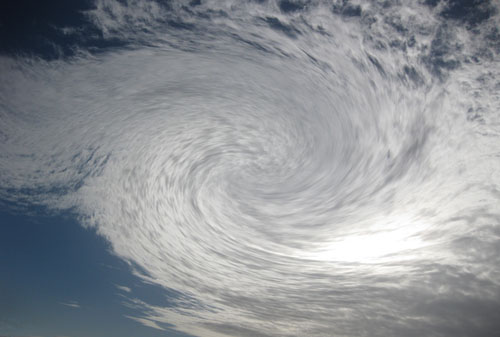
The last six years have seen above-average Atlantic hurricane activity, a bad omen for communities along the coast. This year's season, which runs from June to November, is expected to be another busy one.
Though scientists disagree on how climate change affects the number of hurricanes, warming is expected to intensify storm surges and rainfall, resulting in more flooding.
Insurers and data providers in that sector have invested in data analysts and climate scientists to develop and refine advanced models that can help map out potential damage well before bad weather strikes.
Small inaccuracies in old databases can give a misleading impression on a given site's vulnerability to flooding, according to Dr. Kelly Hereid, a climate scientist who heads the catastrophe research and development unit at Boston-based Liberty Mutual Insurance Co.
One Liberty tool combines aerial imagery and machine learning to define building footprints and provide a more accurate impression of risk, which can then be shared with clients to help strengthen their defenses.
"What was available 10 years ago versus what is available now has really changed," said Dr. Hereid. "There is a vast ecosystem of improved flood analytics tools available."
Understanding the risk and taking preventative measures can make a significant difference for businesses. Dr. Hereid noted that in the aftermath of Hurricane Harvey in 2017, staff at Houston's MD Anderson Cancer Center were able to walk and kayak through flooded streets to a working facility. Following previous floods, the cancer hospital had installed floodgates that allowed it to continue operating even as the surrounding area was inundated with water.
Warming skies and oceans as a result of climate change are widely believed to be exacerbating the situation. Hurricane rainfall, a major factor in Ida's destructive and, in some cases, deadly impact, is thought to be 11% more intense than it was before the industrial age, according to Munich-based insurer Allianz SE.
Last season, Hurricane Ida ripped through the Caribbean into Louisiana before dumping massive amounts of rain in scattered locations, causing an estimated $36 billion in insured losses, according to a recent Allianz report.
According to Mark Anquillare, president of Verisk Analytics Inc., a risk analytics company that provides advanced modeling to major insurers, better modeling has also helped the insurance industry stay solvent despite having to pay for large weather-related losses in recent years.
Verisk databases that store commercial property information, for example, can distinguish between 14 different types of restaurants, ranging from a pub to a white-tablecloth establishment. According to Mr. Anquillare, such granular data can provide insights into the risks that an insurance company faces in a specific area.
"All that data and all those analytics that are constantly improving have improved the industry," Mr. Anquillare said.
Cole Mayer, a senior structurer at Swiss Re, a Zurich-based insurance and reinsurance provider, said more advanced modeling has aided some of the company's more complex products. Among these are parametrics, a growingly popular type of catastrophe insurance that works like a bet on future weather.
A parametric policy will pay out quickly, for example, when wind speed at a specific location exceeds an agreed-upon speed, without the need for the business to perform time-consuming proof of losses.
"That data gets better and better and more granular year after year," Mr. Mayer said.
Insurers said their clients have made changes so that they can respond quickly if their areas are hit by hurricanes or flooding. According to Thomas Varney, Allianz's North American head of risk consulting, one Allianz client provides temporary on-site housing for essential employees whose homes may be damaged by flooding.
Another large client has installed generators in various locations to provide backup power in the event of a storm, according to Mr. Varney.
In this warmer, wetter world, insurers have sought to collaborate more with clients on mitigating climate risks, a practice that has the added benefit of lowering how much insurers may ultimately pay out, according to Liberty's Dr. Hereid. Clients are more concerned with the big picture and how climate change will affect their bottom line, she says.
"We have a lot of work to do as a society to recognize that the climate of the past will not be the climate of the future," Dr. Hereid said. "We need to adapt right now."