











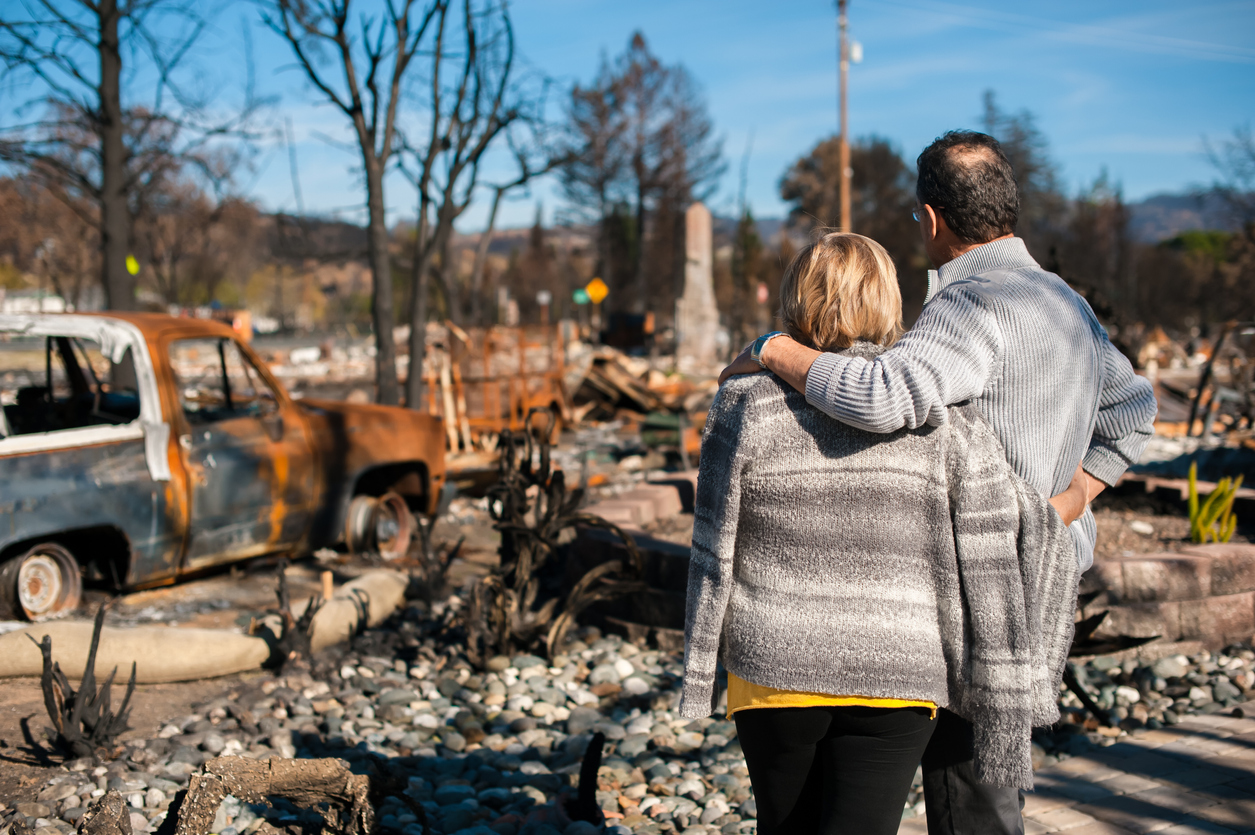
The January 2025 wildfires in Los Angeles revealed persistent challenges in insurance claims handling, coverage availability, and regulatory oversight, according to homeowners, advocacy groups, insurers, and government officials.
Claims Handling After Total Losses
Some wildfire survivors reported significant delays after filing claims, even in cases of total loss. While initial payments for temporary living expenses were issued promptly, subsequent stages of the claims process slowed.
Policyholders described being required to negotiate itemized valuations for personal property rather than receiving full policy limits. Claims were reassigned to multiple adjusters, requiring repeated documentation and restarting negotiations. Disputes over property valuations and rebuilding estimates were common, with some rebuilding funds held in escrow pending settlement and not accounting for architectural or permitting costs.
Broader Patterns Documented
These experiences align with findings from the Department of Angels, a nonprofit formed after the fires. Nearly eight in 10 surveyed homeowners reported obstacles such as multiple adjusters, low estimates, disputes over property inventories, and poor communication. Homeowners with partial damage reported greater frustration than those with total losses.
Complaints documented by advocacy groups and local activists have focused largely on State Farm and California’s Fair Plan, the state’s insurer of last resort.
Insurer Response and Market Conditions
State Farm said it has paid more than $5 billion on approximately 13,500 wildfire-related claims and expects total payouts to reach between $6 billion and $7 billion. The company cited the complexity of disaster claims and stated it remains committed to addressing customer concerns.
Insurers have argued that climate-driven catastrophe losses require higher premiums. In 2023, several carriers stopped issuing new homeowner policies in fire-prone areas of California, citing a misalignment between price and risk. Although regulators approved rate increases, policy cancellations continued.
A New York Times investigation found that insurer requirements to continue writing policies in “distressed” areas were met through broad geographic definitions that did not necessarily include high-risk fire zones.
Profitability and Investment Income
Despite claims disputes, the U.S. insurance industry reported $169 billion in profits last year and is projected to post another strong year in 2025. Much of this income came from investment returns rather than underwriting performance.
Industry data show underwriting losses in nine of the last 15 years, while overall profitability remained positive due to investment income.
Regulatory and Enforcement Scrutiny
Consumer advocates have criticized the California Department of Insurance for failing to enforce existing laws following the wildfires. Insurance Commissioner Ricardo Lara previously acknowledged that his department had been pressured by the industry on climate-related accommodations, including rate increases.
At the local level, Los Angeles County launched an investigation into State Farm’s compliance with state insurance laws. The county demanded documentation related to wildfire claims handling and warned of potential fines. Advocates reported that some delayed claims advanced after the investigation was announced.
Smoke Damage and Climate Loss Trends
Advocates also reported concerns about insurer handling of smoke-damaged properties, including limited testing for toxins. In prior years, California’s Fair Plan used a policy declaring homes safe if smoke damage was not visible or detectable, a practice later ruled illegal.
According to Aon, global insured losses from natural catastrophes reached $145 billion last year, exceeding the 21st-century average by 54 percent. In the first half of 2025 alone, losses surpassed $100 billion. Industry data indicate wildfires account for about 5% of catastrophic claims, compared with 12% for hurricanes and 40% for tornadoes and other convective storms.
Get the latest insurance market updates and discover exclusive program opportunities at ProgramBusiness.com.