











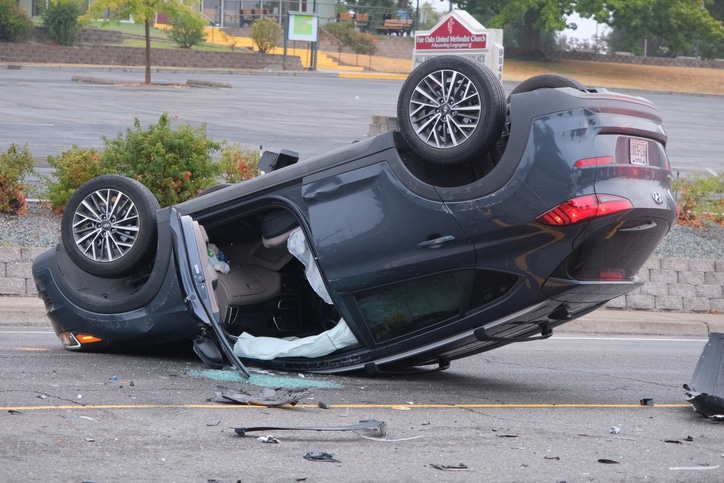
Preliminary analysis from the National Safety Council estimates 37,810 motor vehicle crash deaths in the United States in 2025. That figure represents a 12% decrease from 2024, even as overall miles driven increased by 0.9%. The Council released the data Feb. 24, 2026.
Nine states and the District of Columbia recorded decreases of more than 15%. The largest decline occurred in Washington, D.C., which saw a 52% reduction. California followed with a 40% decrease. Other states reporting declines of more than 15% were Rhode Island at 29%, Iowa at 24%, Minnesota at 21%, Mississippi at 19%, New York at 18%, and Connecticut, Maryland, and South Dakota, each at 16%.
In contrast, eight states experienced increases in traffic fatalities. Hawaii recorded the largest increase at 25%. Wyoming followed with a 12% rise, and Kansas reported a 10% increase. New Mexico saw an 8% increase, while Idaho saw a 7% increase. Louisiana and Vermont each experienced a 5% increase, and Colorado recorded a 3% increase.
Lorraine Martin, NSC CEO, emphasized the significance of the decline. “The decrease in roadway fatalities is more than a number. It represents lives saved and families kept whole,” Martin said. “It is also proof that our sustained efforts to make our roads safer are working. We must continue to work together as advocates, policymakers, and communities to build on this progress until no one ever loses their life on our roads again.”
The Council stated that the progress reflects coordinated, multi-stakeholder efforts such as those advanced by the Road to Zero Coalition. NSC leads the coalition in partnership with the U.S. Department of Transportation. The coalition includes more than 650 organizations and aims to eliminate roadway fatalities in the United States by 2050.
According to NSC, dangerous driving behaviors, including speeding, distracted driving, and impaired driving, remain the leading causes of traffic deaths for pedestrians, cyclists, passengers, and drivers. Addressing these risks requires driver education, infrastructure improvements, improved vehicle design, legislation, and evidence-driven technology.
NSC continues to advocate for safety technologies that have demonstrated effectiveness in reducing crashes and saving lives. These technologies include speed safety cameras, intelligent speed assistance, telematics, advanced impaired driving prevention technology and automatic emergency braking.
The Council also calls for coordinated government action based on the Safe System Approach. NSC urges the U.S. Department of Transportation to maintain its commitment to engage transportation stakeholders working toward zero fatalities and serious injuries by 2050. The Council stated that this vision should include collaboration with the Departments of Labor and Health and Human Services, as well as coordination among technology providers, motor vehicle manufacturers, and safety advocates. In addition, NSC stated that aligning federal, state, and local resources, requiring necessary vehicle technology, and supporting research can strengthen roadway safety.
The Safe System Approach is a holistic roadway safety model focused on five elements: safer roads, safer speeds, safer vehicles, safer people, and better post-crash care. NSC stated that the approach has shown measurable success in eliminating preventable traffic fatalities.
Motor vehicle fatality estimates may fluctuate slightly as data matures. NSC uses data from the National Center for Health Statistics, part of the Centers for Disease Control and Prevention. The Council’s estimates include deaths that occur within 100 days of a crash and those that take place on public and private roadways, including parking lots and driveways.
NSC has calculated traffic fatality estimates since 1913. Supplemental estimate information, including monthly and state-by-state data, is available through the organization.
The National Safety Council is a nonprofit safety advocate that has operated for more than 110 years. The organization focuses on eliminating the leading causes of preventable death and injury in workplaces and on roadways. It works to create a culture of safety both on and off the job so people can live fully and safely.
Stay informed and ahead of the curve — explore more industry insights and program opportunities at ProgramBusiness.com.