











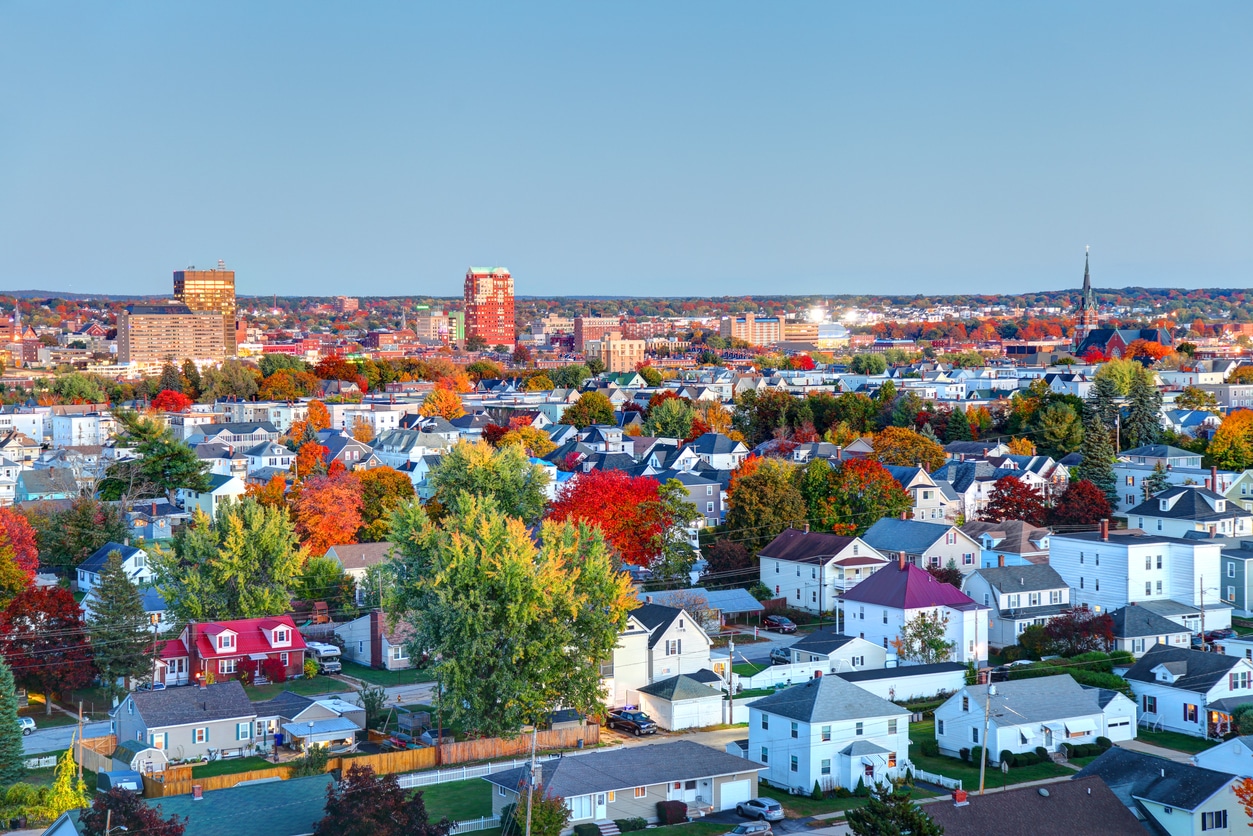
New Hampshire homeowners continue to pay some of the lowest insurance costs in the nation, according to new data from the U.S. Census Bureau and the Realtor.com® 2025 Climate Risk Report. While premiums have soared in coastal states along the Gulf of Mexico and wildfire-prone regions in the West, New Hampshire households remain relatively insulated from these national affordability challenges.
New Hampshire’s Insurance Costs Stay Affordable
The American Community Survey (ACS) data from the U.S. Census Bureau shows that New Hampshire homeowners with a mortgage typically pay $1,000–$1,499 annually for homeowners insurance. Those without a mortgage also average $1,000–$1,499, putting overall statewide costs in the same range.
The state has 414,145 insured homeowner households — 250,792 with a mortgage and 163,353 without. Among mortgaged owners, 18,790 pay less than $100 annually, and 10,210 pay $4,000 or more. For those without a mortgage, 22,541 pay less than $100, and 4,774 pay $4,000 or more.
Compared with nearby states, New Hampshire remains affordable. Maine homeowners with a mortgage typically pay $1,000–$1,499, though those without average $800–$999. Vermont is similar to New Hampshire, with mortgaged households paying $1,000–$1,499. Massachusetts and Rhode Island are higher at $1,500–$1,999, as is Connecticut. This places New Hampshire among the most affordable New England states for homeowners insurance.
Climate Risks Across the Region
The Realtor.com 2025 Climate Risk Report highlights how climate-exposed metros face the steepest insurance burdens. Miami, Florida, leads the nation, with average annual premiums of $22,718, or 3.7% of median home value. Florida metros such as Cape Coral, Sarasota, and Tampa also rank among the most expensive.
New Hampshire does not appear in the report’s rankings of metros with the steepest insurance burdens or the most extreme flood, hurricane, or wildfire risks. While the state faces seasonal hazards like winter storms and localized flooding, these risks have not significantly impacted statewide premiums.
A National Affordability Challenge
Even though New Hampshire homeowners enjoy relatively low costs, affordability remains a growing concern nationwide. The Realtor.com 2025 Insurance Affordability Report found that 75% of Americans believe homeowners insurance could soon become unaffordable, while nearly half said they had already faced difficulties obtaining or renewing coverage.
Insurance challenges are also reshaping housing decisions across the country. Nearly 30% of homebuyers said they had completely changed their search areas due to insurance costs, while another 25% said they had overhauled their strategies altogether. In addition, 58% of homeowners said they would consider dropping insurance entirely if premiums rose too high, with Gen Z homeowners the most likely to take that risk.
For New Hampshire households, relatively low premiums provide an affordability advantage. However, as climate risks increase nationwide, the state could face new pressures that may raise costs in the future.
Get the latest insurance market updates and discover exclusive program opportunities at ProgramBusiness.com.