











A new study from the University of California, San Diego’s Scripps Institution of Oceanography finds that the economic cost of climate change is nearly double previous estimates after accounting for damage to the ocean. The research marks the first time an assessment of the social cost of carbon has formally included ocean-related losses.
The social cost of carbon, often referred to as SCC, is a metric used to estimate the economic harm associated with each metric ton of carbon dioxide emitted into the atmosphere. International organizations and government agencies, including the U.S. Environmental Protection Agency, have historically used the SCC to evaluate climate and energy policy proposals.
Until now, those calculations excluded ocean impacts.
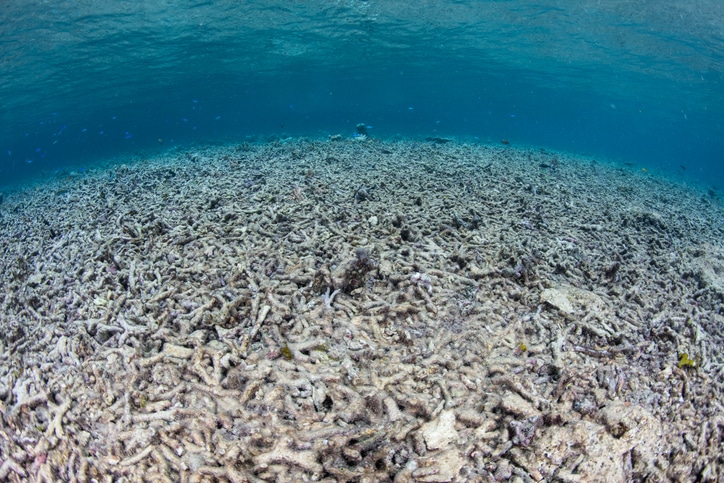
According to the study, damages tied to global coral loss, fisheries disruption, and coastal infrastructure destruction amount to nearly $2 trillion annually. By incorporating those losses, researchers found that the social cost of carbon rises from $51 per ton of carbon dioxide to $97.20 per ton, an increase of 91%.
“Ocean loss is not just an environmental issue, but a central part of the economic story of climate change,” said Bernardo Bastien-Olvera, who led the study during his postdoctoral fellowship at Scripps.
The ocean covers approximately 70% of the planet. In 2024, global carbon dioxide emissions totaled an estimated 41.6 billion tons, making the revised cost estimate significant in scale.
The study also projects future economic impacts. Using greenhouse gas emission forecasts, researchers estimate that annual damages to traditional markets alone will reach $1.66 trillion by 2100.
To complete the analysis, the research team, which began work in 2021, brought together fisheries experts, coral reef researchers, biologists, and climate economists. The group evaluated climate-related losses across four sectors: corals, mangroves, fisheries, and seaports. The assessment included both direct market losses, such as reduced fisheries output and marine trade disruption, and declines in ocean-based recreation.
In addition to market impacts, the study assigned monetary values to what economists describe as non-use values. These include the cultural, aesthetic, and ecological significance of ocean ecosystems that people may never directly experience but still value.
“Something has value because it makes the world feel more livable, meaningful, or worth protecting, even if we never directly use it,” Bastien-Olvera said.
The findings also highlight uneven global effects. Island economies and lower-income countries that depend heavily on seafood for nutrition face disproportionate financial and health impacts from ocean warming and acidification. According to the study, including ocean data in SCC calculations reveals increased risks related to morbidity and mortality tied to nutritional deficiencies in these regions.
“The countries that have the most responsibility for causing climate change and the most capacity to fix it are not generally the same countries that will experience the largest or most near-term damages,” said Kate Ricke, a study co-author and climate professor at UCSD’s School of Global Policy and Strategy.
While the social cost of carbon has served as a key policy tool, it has also been subject to political debate. A 2025 White House memo from the Trump administration instructed federal agencies to disregard SCC estimates in cost-benefit analyses unless legally required. Amy Campbell, a United Nations climate advisor and former British government negotiator, noted that disputes often arise over which damages are included and how future harms are valued.
Despite those challenges, researchers involved in the study expressed optimism that the findings could inform international decision-making. Ricke referenced the potential for increased investment in ocean adaptation and resilience, including coral reef and mangrove restoration.
The study also acknowledges the longstanding role of coastal communities, ocean scientists, and Indigenous groups in recognizing ocean value. Bastien-Olvera said incorporating ocean damage into climate economics represents a shift away from treating ocean systems as economically negligible.
“For a long time, climate economics treated the ocean values as if it were worth zero,” he said.