











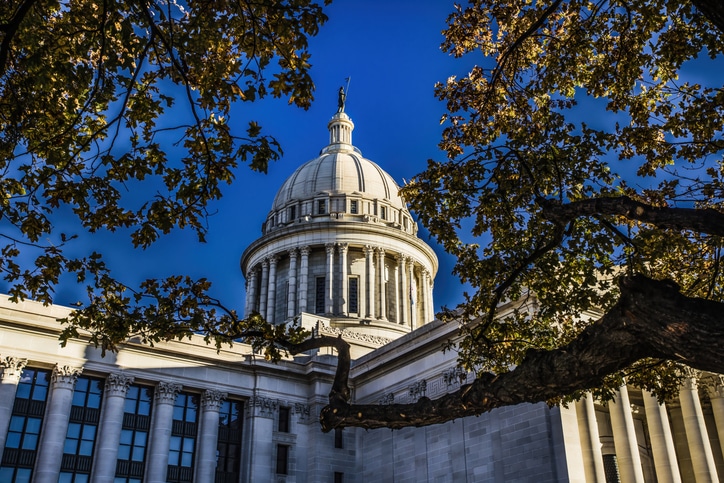
The Senate Business and Insurance Committee on Thursday approved Senate Bill 1435 by a 5-3 vote. Senate Minority Leader Julia Kirt, D-Oklahoma City, authored the measure. The bill would bar insurance companies from considering credit information when setting rates.
Kirt Cites Disparities Linked to Credit-Based Rating Practices
Kirt said the practice can lead to disparities among policyholders with similar risk profiles. During the committee discussion, she described scenarios in which individuals with strong driving records but weaker credit histories pay higher auto insurance premiums than neighbors with multiple accidents and stronger credit. She also cited homeowners with identical properties receiving different premiums based solely on credit scores.
Credit history currently plays a role in determining interest rates for financial products such as credit cards, home loans, and vehicle loans. A credit score is a numerical measure that reflects factors including payment history, total debt, and available credit.
Lawmakers Question Impact on Insurance Rates
During the hearing, Sen. Brian Guthrie, R-Bixby, asked whether states that have banned the use of credit scores have seen reduced insurance rates. Kirt responded that while some states have prohibited the practice, those actions were part of broader reforms. As a result, she said it is difficult to isolate the effect on rates.
Kirt also pointed to the impact on homeowners insurance costs in Oklahoma. She said Oklahomans with what she described as mildly poor credit scores can pay more than double the price for home insurance than those with stronger credit. According to Kirt, this creates a financial penalty for lower-income individuals, even when they do not present higher claim or weather-related risks.
She said insurers conflate credit risk with insurance risk and questioned whether data support that correlation.
Industry Group Warns of Cost Shifts for Low-Risk Policyholders
The American Property Casualty Insurance Association opposes the bill. In a letter provided by Kirt’s office, Walter R. Gonzales, assistant vice president for state government relations, said the proposal would force safe, low-risk drivers to subsidize higher-risk policyholders.
Gonzales wrote that credit-based insurance scores save consumers an average of 30% to 59% and that most consumers either benefit from their use or see no impact. He also stated that the scores reflect long-term behavior patterns that correlate with claim frequency and severity. According to Gonzales, 47 states allow insurers to use credit-based insurance scores.
Bill Advances With Title Stricken as Other Measures Are Delayed
The committee advanced Senate Bill 1435 with its title stricken, a legislative maneuver that slows the process by requiring additional steps before the bill can become law.
The committee did not take action on two other insurance-related measures authored by Kirt. Committee Chair Bill Coleman, R-Ponca City, delayed consideration of Senate Bill 1438 and Senate Bill 1444, citing the absence of a committee member with insurance industry expertise. The American Property Casualty Insurance Association also opposes those measures, which remain on hold.
Stay informed and ahead of the curve — explore more industry insights and program opportunities at ProgramBusiness.com.