











As rebuilding begins in Pacific Palisades and Altadena, architects and developers are rethinking residential construction following last year’s wildfires, according to a recent Bloomberg article. One year after fires killed at least 31 people and destroyed more than 10,000 buildings in Los Angeles County, recovery remains uneven, shaped by insurance outcomes, permitting timelines, and homeowner resources.
Hundreds of new homes have been submitted for permits, although progress varies widely. In fire-affected areas, local authorities have eased permitting and environmental review requirements in an effort to speed rebuilding. Housing advocates say those measures highlight processes that could be applied more broadly in a region facing one of the nation’s most severe housing shortages.
Despite discussions about land use and density, most rebuilding projects continue to involve single-family homes on individual lots. Within that framework, builders are focusing on materials, construction systems, and layouts intended to improve wildfire resistance.
Modular and factory-built housing has emerged as one option. Cassette Homes produces standardized, wood-framed homes built in a central California factory and designed to meet CAL FIRE wildfire guidelines. Features include fire-resistant siding, tempered windows, specialized roof vents, and sprinkler systems. Installation typically takes four to eight weeks once permits are approved.
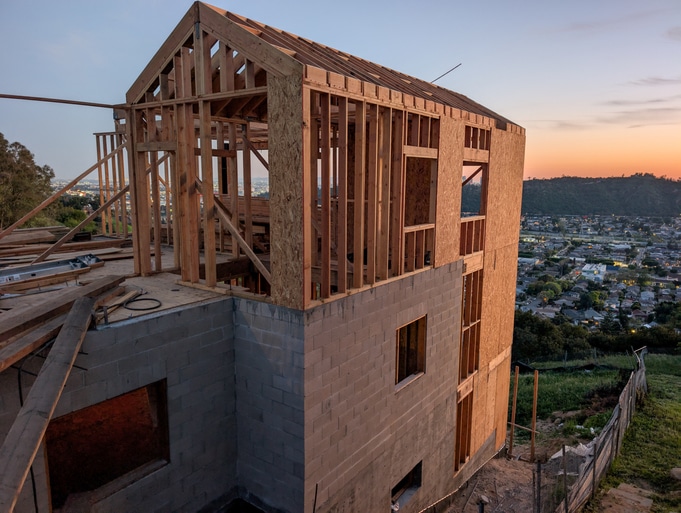
RSG 3-D uses Structural Concrete Insulated Panels, which combine steel, insulation, and concrete. Founder Ken Calligar said the system adds about 5% to the cost of a small single-family home while improving durability and energy efficiency. Several RSG projects are permitted in the Palisades, with construction underway on at least one site.
Ghost Factory uses on-site steel fabrication to reduce framing timelines. The company says steel construction can shorten schedules and affect insurance considerations, although material costs are higher than traditional wood framing.
Samara, a housing startup founded by Airbnb cofounder Joe Gebbia, produces factory-built accessory dwelling units and small homes. In partnership with the Steadfast LA initiative, Samara is providing units to displaced Palisades homeowners. California law allows ADUs to be built before a primary residence, offering a faster path to occupancy.
Architectural design choices also reflect wildfire risk. Projects emphasize noncombustible materials, closed eaves, unvented attics, triple-glazed windows, and defensible landscaping. SPF: architects designed a Palisades replacement home with a simple rectangular form that avoids ember-catching elements and includes a perimeter of brick pavers for defensible space. The project moved through the city’s expedited fire permitting process in about a month.
Montalba Architects proposed a masonry-shell home with a central courtyard that balances fire resistance with Southern California’s indoor-outdoor living traditions. Architect David Montalba cited ongoing challenges in balancing cost, comfort, and risk.
In Altadena, some rebuilding efforts focus on preserving neighborhood character. Omgivning is relocating older homes slated for demolition elsewhere in Los Angeles County, restoring them and adding fire-resistant features. The process costs about 80% of a new build and requires extensive permitting and coordination.
The Foothill Catalog Foundation has created pre-approved home plans inspired by Altadena’s architectural styles, including Craftsman and Midcentury designs. Once a plan is permitted, other homeowners can reuse it to shorten approval timelines. Habitat for Humanity is constructing the first such home, with additional projects expected in early 2026.
Together, these efforts illustrate how post-fire rebuilding in Los Angeles is testing new construction methods while largely maintaining existing residential patterns, even as recovery continues to unfold.