










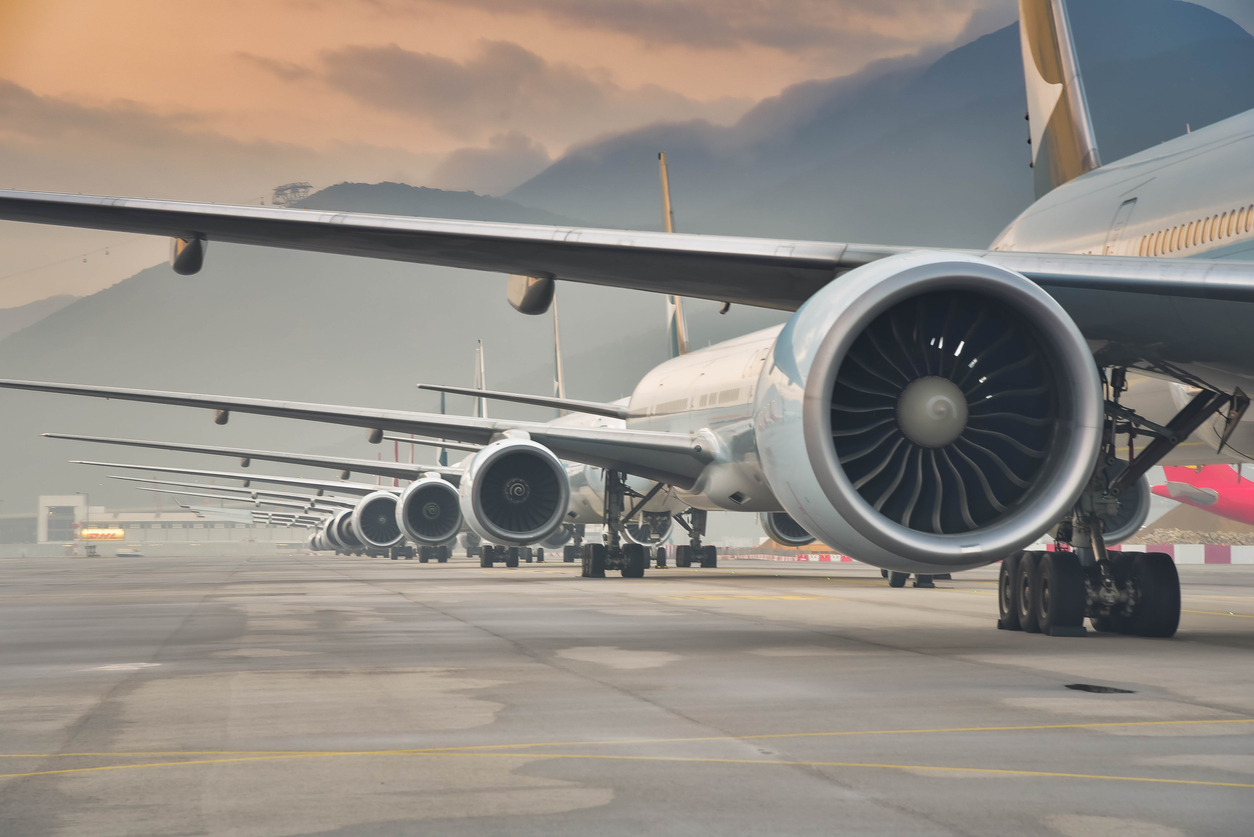
On Thursday, Russia published a draft law that would allow it to hold approximately 500 foreign-owned aircraft hostage.
Western sanctions against the Kremlin have given leasing companies, many of which are headquartered in Ireland, until March 28 to exit deals with Russian carriers.
However, according to Russian transport ministry proposals, its airlines will make lease payments in rubles for the rest of the year.
If leasing companies breach their contracts, a new commission established by the Kremlin will decide whether the aircraft can be returned or remain in Russia.
Since Mr Putin's forces invaded Ukraine last month, the insurance industry has been bracing for the confiscation of jets stranded in Russia by the state.
Insurance contracts are in place between airlines and leasing companies to protect against aircraft damage or loss.
The global aviation insurance market is dominated by Lloyd's. It assumes nearly all of the risk associated with aviation insurance, in collaboration with reinsurance companies on the Continent.
Insurance brokers anticipate that policies will be triggered under "Hull War and Allied Perils" clauses, which protect policyholders from the consequences of war.
According to the analytics firm Cirium, Russian airlines have 980 jets in service. 777 of these are leased, with two-thirds of them leased from foreign leasing specialists.
Although the total value of the threatened aircraft is $10 billion, losses are likely to be distributed globally as Lloyd's underwriters offload their risk to specialist reinsurance firms. Lloyd's did not respond to a comment request.
However, the losses could be substantial. Hurricanes Charley, Frances, and Ivan in 2004 resulted in payouts totaling approximately $25 billion, with Lloyd's receiving $2.3 billion.
The City of London insurance market lost $1.4 billion in the 1988 Piper Alpha disaster, when a North Sea oil production platform exploded with 226 people on board.
According to Paul Jebely, an asset finance specialist at law firm Withers, "it is now increasingly likely that aircraft lessors will write-off hundreds of millions, if not billions, of dollars in losses."
"As rational economic actors, insurers are likely to fight tooth and nail for years to avoid billions of dollars in potential claims."