











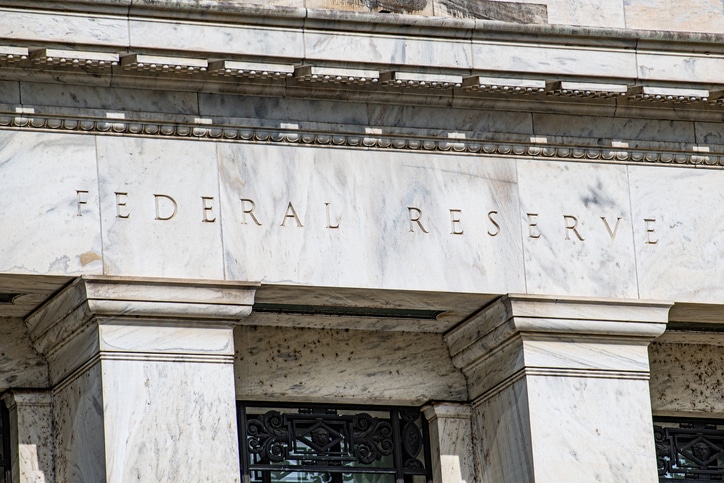
President Donald Trump said Friday that he will nominate Kevin Warsh to serve as the 17th chair of the Federal Reserve Board, replacing Jerome Powell when Powell’s term ends in May.
Warsh previously served as a Federal Reserve governor and was appointed to the Board of Governors in 2006 at age 35, making him the youngest person to serve in that role. He is now 55. Trump announced the nomination publicly and later reiterated his support during an Oval Office meeting.
Background On Kevin Warsh
Warsh is a former Fed governor who worked at the central bank during the financial crisis and played a role alongside then-Fed Chair Ben Bernanke and former New York Fed President Timothy Geithner. He later resigned from the Federal Reserve in 2011 due to policy disagreements related to crisis-response measures.
Before his Fed service, Warsh worked as an economist in the George W. Bush administration. He is currently a visiting fellow at Stanford University’s Hoover Institution.
Warsh was previously considered for senior economic roles during Trump’s first term, including the Fed chair position and Treasury secretary. He again emerged as a leading contender during the administration’s most recent search process.
Monetary Policy Record And Recent Statements
Throughout much of his career, Warsh built a reputation as an inflation-focused policymaker. During an April 2009 Federal Reserve meeting, held as unemployment surged during the Great Recession, Warsh expressed concern about inflation risks rather than deflation. Meeting minutes later documented his view that inflation posed greater upside risk at the time.
Warsh also criticized quantitative easing after the Great Financial Crisis, arguing that large-scale Treasury purchases risked raising inflation and expanding the Fed’s mandate beyond its core objectives.
More recently, Warsh has publicly supported lower interest rates and has called for changes to the Federal Reserve’s workforce. Economists and analysts have noted this shift in his public stance in recent months.
Selection Process For Fed Chair
Trump’s selection followed an extensive search that included roughly a dozen potential candidates, according to Treasury Secretary Scott Bessent, who led the process. Bessent said he was considered for the role but chose to remain Treasury secretary.
Other finalists included National Economic Council Director Kevin Hassett, Fed Governor Christopher Waller, and Rick Rieder of BlackRock. Trump publicly acknowledged those candidates after announcing Warsh as his nominee.
Senate Confirmation Process
The Senate Banking Committee will review Warsh’s nomination through a public hearing before sending it to the full Senate for a confirmation vote. Committee members are expected to question Warsh about his monetary policy views, including changes in his position on interest rates, as well as his past disagreements with Fed leadership.
Lawmakers may also raise questions about the Federal Reserve’s independence and Warsh’s prior departures from the central bank over policy disputes.
Additional Background
Warsh married Jane Lauder in 2002. She is a businesswoman and the granddaughter of Estée Lauder. Warsh is the son-in-law of Ronald Lauder, a prominent Republican donor. Warsh and Jane Lauder met while attending Stanford University.
As the nomination moves forward, Warsh’s prior experience, monetary policy record, and views on the Federal Reserve’s role are expected to remain central to Senate deliberations.
Stay informed and ahead of the curve — explore more industry insights and program opportunities at ProgramBusiness.com.