










 Two of the biggest names in finance are pressing American International Group Inc. to split into three pieces, a move to break up a giant insurer that threatened to bring down the banking system during the financial crisis.
The argument made by billionaires Carl Icahn and John Paulson is that by dividing into smaller parts AIG could escape onerous regulations imposed by federal policy makers in an effort to head off systemic threats like the one AIG once posed.
If successful, the efforts could advance the goals of regulators who are threatening big financial institutions with tougher oversight, in part hoping they will be encouraged to shrink. AIG is one of the world's biggest insurance companies, with a market value of about $83 billion.
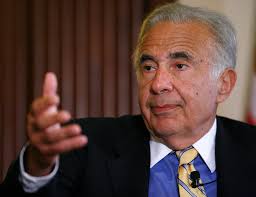
Mr. Icahn conveyed his demand in a public letter to AIG Chief Executive Officer Peter Hancock that said breaking apart the company's three main insurance businesses - life, property-and-casualty and mortgage - would boost the company's stock.
Mr. Paulson has advocated for a similar three-way breakup in conversations this year with senior management that executives then passed on to board members, people familiar with the situation said.
Mr. Icahn in his Wednesday letter quoted Mr. Paulson as saying AIG was overdue for a breakup. But the two investors aren't working together, these people said.
AIG, Mr. Icahn said in the letter, has become "too big to succeed." He said in a tweet Wednesday that he has taken a "large stake" in the insurer.
The company, which reports earnings Monday, said it welcomes ideas but is already on course to simplify its operations and reduce risk.
The campaigns by two of the most prominent U.S. investors are the latest evidence of how new rules passed since the financial crisis are roiling the financial-services industry. This year, General Electric Co. CEO Jeffrey Immelt decided to unwind GE Capital because of stricter oversight that it said crimped its banking business.
AIG's shares climbed 4.9% on Wednesday and are up 14% this year. The company has been struggling to boost a critical measure of profitability as it battles pricing pressures. Through June 30, AIG's return on equity stood at roughly 8%, below the 13% to 15% notched by some rivals.
The notion of a split isn't a new idea inside AIG's boardroom. AIG directors have considered that approach along with other strategic options ever since the company was under the control of the U.S. government, said people familiar with the matter. The company is working with Morgan Stanley bankers as it grapples with the new shareholder push.
So far, however, AIG believes the downsides outweigh the upsides of a breakup, according to the people. It would be difficult to execute, and AIG is unsure a breakup would remove its federal designation as a systemically important financial institution, the people said. The label indicates the government believes the companies could pose risks to the broader economy during a crisis. The designation brings with it heightened scrutiny and requirements to hold robust capital buffers against unexpected losses.
The insurer sees its costs rising from a split in part because of the way its sales force is structured, and AIG executives also are worried about how credit-ratings firms would react, people familiar with the matter said.
The company’s current makeup means AIG has a more balanced portfolio “so no one business issue can take you down,” one of the people said.
AIG first heard about Mr. Icahn’s plans to go public Tuesday afternoon with a call to the company, people familiar with the matter said.
Mr. Icahn believes AIG isn’t getting any cost benefits from staying together, and thinks the company could return $20 billion in capital to shareholders after a split, without affecting credit ratings, people familiar with the matter said.
In his letter to Mr. Hancock, who has been AIG’s CEO for just over a year, Mr. Icahn said the burdens of the systemically important designation are hurting AIG.
MetLife Inc., the largest life insurer in the U.S. by assets, has also been designated systemically important and is suing the federal government over the label. The Wall Street Journal reported in June that U.S.-based Prudential Financial Inc. could follow if MetLife wins its battle. AIG hasn’t mounted a similar challenge.
AIG, which had $510 billion in assets at the end of June, nearly collapsed in 2008 after taking on enormous amounts of exposure to securities linked to subprime mortgages. It was bailed out by U.S. taxpayers and took until late 2012 to repay the nearly $185 billion in aid, selling nearly 30 businesses totaling more than $90 billion in assets. At one point, the government owned about 90% of the company.
Activist investors have generally steered clear of the insurance industry because any breakups must go through state insurance departments for approval, and regulators have broad powers in deciding whether a deal is in the best interests of policyholders.
In taking on AIG, Mr. Icahn is also picking a fight with a board that already has seated two activist-friendly directors. Robert S. “Steve” Miller, who had been chairman until this past July, was nominated last year by Dan Loeb’s Third Point LLC hedge fund to the board of Dow Chemical Co. amid a fight there. He joined Dow’s board this January.
Meanwhile, Henry Miller was appointed to the board of Interpublic Group of Cos. this year after being put forward by activist hedge fund Elliott Management Corp.