











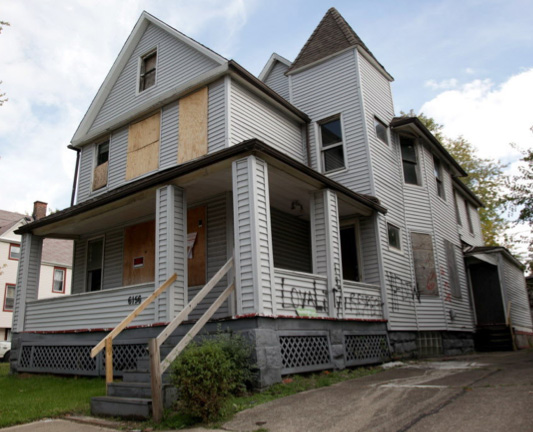
 As the foreclosure crisis swells the ranks of
 In the past year, Kansas City, Syracuse, N.Y., and communities in Pennsylvania, among others, have set up "land banks"-independent authorities focused on turning around derelict properties. They acquire houses and lots through tax foreclosures or purchases, or directly from banks and local governments, then speed up reuse by eliminating title entanglements and marketing properties for resale.
The banks are designed to end a struggle for local governments, which can take years to acquire vacant properties and often have no plans for them once they do. Structures can sit empty for years, dragging down real-estate values and fueling crime.
Illinois's Cook County, which includes Chicago, had 78,000 mortgage foreclosures pending at the end of last year, more than five times the 2005 number. Now it is setting up what is expected to be the country's largest land bank, funded initially with $6 million from a settlement with mortgage lenders.
"We know how to manage an increasing demand for housing. We have never figured out a way to manage a declining demand for housing that looks like anything other than failure," said Cook County Commissioner Bridget Gainer.
Brooklyn Avenue, in Kansas City's Ivanhoe neighborhood, is dotted with 100-year-old houses, many with boarded-up windows and sagging porches. Along one stretch, two houses are abandoned, while a barking dog signals squatters in a third. All three were foreclosed on for unpaid taxes, but the city has struggled to get them back on the market, in part because of a requirement that they be sold for two-thirds of appraised value-a price that often draws little interest from buyers, officials said.
Under new rules, the Kansas City land bank and a sister organization are allowed to sell the houses at a lower price. They also can require the new owners to spend money to fix them up. And the bank gets money from the city to market the properties.
Margaret May, executive director of the Ivanhoe Neighborhood Council, is counting on the bank to reverse a vacancy rate of 40% and to curb speculators' gobbling up properties with no plans to repair them. "That's our nemesis," Ms. May said of the vacancy rate. "It was building over a number of years and the foreclosure crisis made it worse."
Land banks have been around since the 1970s but gained more attention in the past decade when a new generation of banks with increased powers arose in Rust Belt cities facing population decline. The Genesee County Land Bank, which includes Flint, Mich., was one of the first. Last year it sold over 900 properties, though it still holds some 9,600 for which there is largely no market.
Since foreclosures began to rise in 2007, elected officials' focus has been on keeping people in their homes, but now it is shifting to dealing with vacant properties, said Daren Blomquist, vice president of foreclosure-tracking firm RealtyTrac. He estimates 20% of the 845,000 U.S. homes in the foreclosure process are vacant.
State legislatures have passed land-bank laws in Nebraska, Missouri, New York, Georgia and Pennsylvania in the past two years, with cities and counties now starting to launch them.
"What happened with the Great Recession is vacancy and abandonment became part of the culture of virtually every community," said Frank Alexander, an Emory University law professor and founder of the Center for Community Progress, which advocates for land banks.
In some places, land banks are meeting resistance. The Show-Me Institute, a Missouri-based think tank advocating free-market approaches, has raised concerns about the Kansas City bank, warning it will lead to more properties coming under government ownership.
The group also points to indictments this year in Indianapolis, where land-bank officials were accused of taking bribes to steer properties to investors at depressed prices. All five people charged have pleaded not guilty, according to court records.
Supporters say land banks have become more transparent, and that a clear incentive exists to move properties to private ownership. The banks, which are meant to eventually become self-sustaining, are funded in a variety of ways, including money from sales and a portion of the property-tax revenue from properties returned to the rolls.
With 3,600 properties, the Kansas City bank faces a challenge. But Ms. May sees hope in the new authority. Her group is working with a developer interested in rehabbing the three houses on that stretch of Brooklyn Avenue owned by the bank.
On a recent morning, Ivanhoe resident James Thomas cleaned his driveway in the shadow of weeds from the lawn next door. The neighboring house has been empty for six months, and Mr. Thomas, 56 years old, fears criminals will start using it.
"I've got to be real careful," he said. "On your toes all the time."