











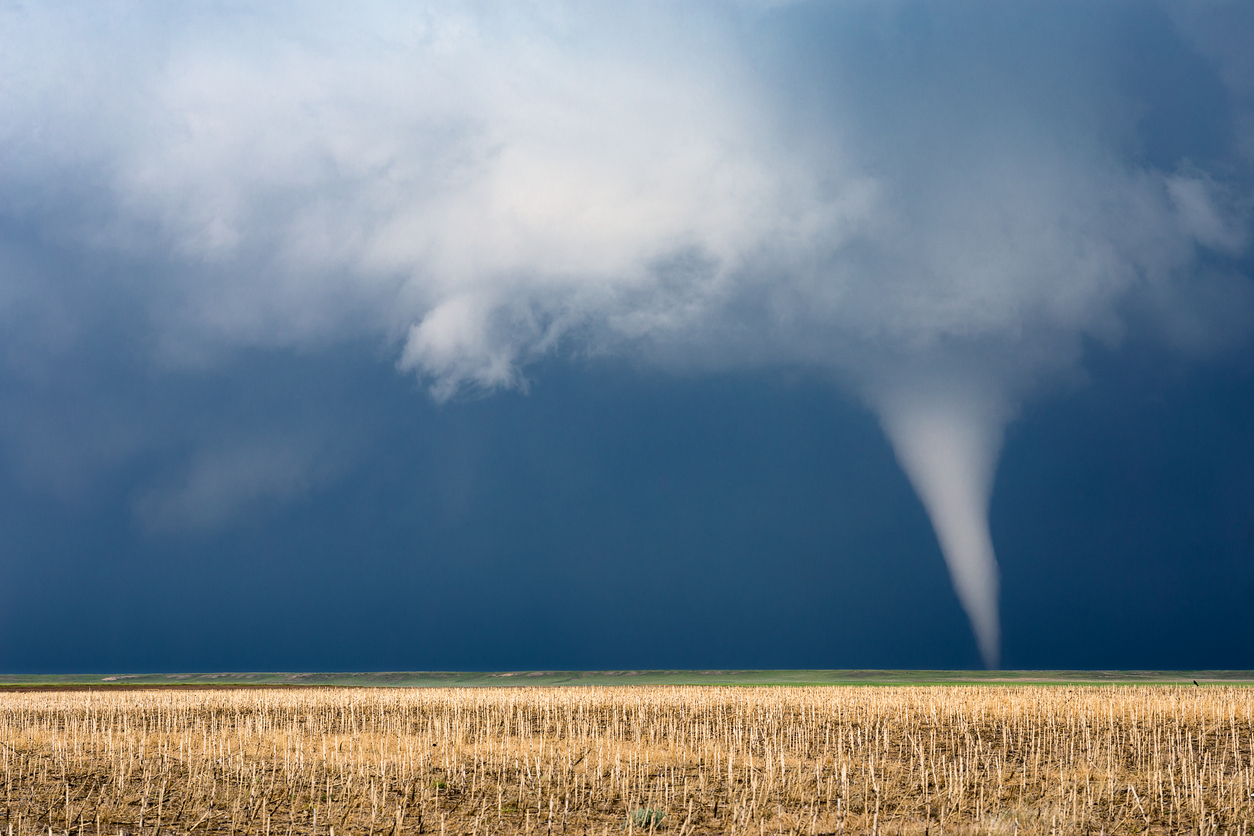
“Reinsurers and national insurers rely on geographic diversification in underwriting to maintain a stable, profitable portfolio,” Best wrote. “As the frequency and intensity of convective storms increase and the geographic areas where they occur expand, effective diversification becomes more difficult for insurers.”
Property insurers are feeling greater and greater impact of secondary perils – such as hail, tornadoes, and flooding – on underwriting results and their policyholders’ surplus, according to the report. U.S. SCS activity resulted in at least $35 billion in economic losses and at least $29 billion in insured losses as of mid-June, Gallagher Re reported. An outbreak of storms from June 10-19 alone resulted in an estimated $5.5 billion in insured losses, according to catastrophe (CAT) modeler Karen Clark & Co. Allstate estimates CAT losses of $1.68 billion for April and May, 70% of which are related to two wind and hail events.
Best noted that the most recent SCS activity impacted Texas, Louisiana, Arkansas, and Mississippi, states that are also often in the path of Atlantic hurricanes.
“These storms, which struck during hurricane season, only adds to the hazards insurers face during these months and lessens the degree of risk diversification in the portfolios of property insurers,” Christopher Graham, senior industry analyst at Best.
At particular risk of heavy losses are insurance companies highly concentrated in Gulf states. According to Best, 14 entities have property portfolios that are solely concentrated in Texas. Louisiana and Mississippi each have two single-state writers, and one insurer has a property book of business that is entirely concentrated in Mississippi. State Farm is the largest writer of overall premiums in each of these states. (Notably, State Farm recently stopped writing new homeowners policies in California, a state plagued by a different type of CAT – wildfires.)
“Considering the impact of the storms that hit this region in the first half of 2023, the year is shaping up to be a bad one as we approach peak hurricane season,” Best wrote.