












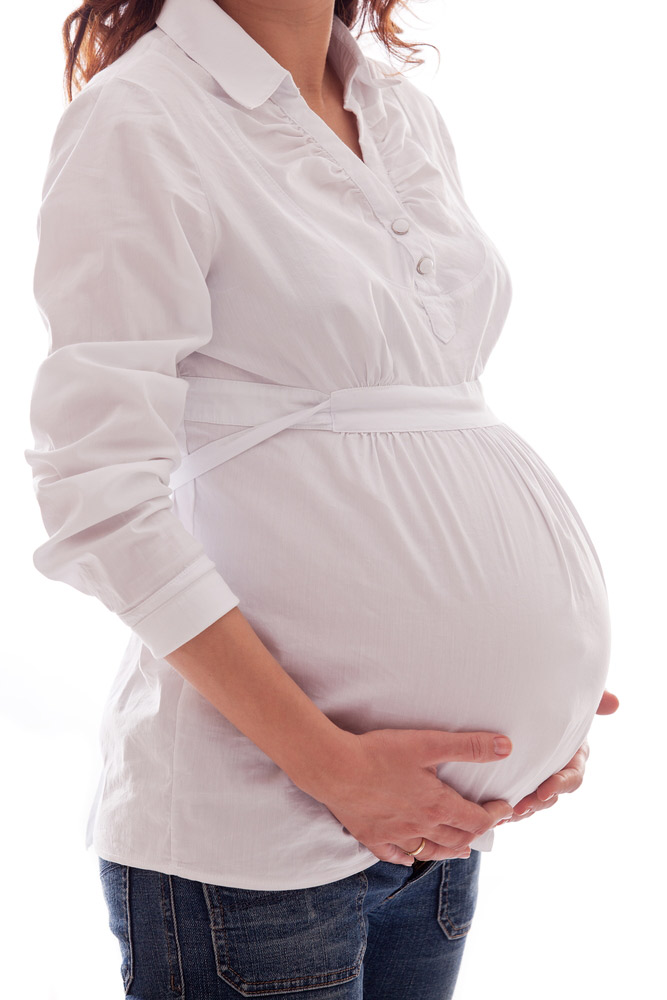
 Expanded federal rules adopted by the Equal Employment Opportunity Commission, effective immediately, update pregnancy discrimination guidelines for the first time in three decades, for the first time clarifying how the Americans with Disabilities Act applies to pregnant workers. The new guidelines make it clear that workplace discrimination or harassment against pregnant workers (whether that pregnancy is past, present or prospective) qualifies as sex discrimination, an illegal act. The clarification could have major reverberations in the workplace and the courtroom alike.
The EEOC cited a "persistence of overt pregnancy discrimination, as well as the emergence of more subtle discriminatory practices" as impetus for the new guidelines.
Joan C. Williams, a law professor at the University of California's Hastings School of Law in San Francisco, said the new guidelines issued this week can have two major impacts: steering EEOC investigators to be more sensitive to the sometimes special needs of pregnant workers and giving employment lawyers more ammunition in defending clients who were victims of such discrimination.
Williams, an expert in the field whose work is cited three times in the EEOC's new 60-page "enforcement guidance" on pregnancy discrimination, called the toughened stance of the EEOC "a significant victory."
Williams, who co-authored a 2011 study called "Pregnant, Poor and Fired," said the main impact may by erecting "very, very, simple and very, very commonsense" guideposts for EEOC investigators, as well as providing strong ammunition for employment lawyers whose clients are victims of such discrimination.
"I think it will make a really big difference," she said in an interview. "This is also the direction the courts have begun to go in, and that's why the EEOC said, 'Yeah, that makes sense.'"
The guidelines were last updated in 1983. EEOC Chairwoman Jacqueline A. Berrien suggested the update was needed and timely. "Despite much progress, we continue to see a significant number of charges alleging pregnancy discrimination, and our investigations have revealed the persistence of overt pregnancy discrimination, as well as the emergence of more subtle discriminatory practices," she said in a statement.
The new guidelines prohibit employers from forcing pregnant workers to take leave and acknowledge that "employers may have to provide light duty for pregnant workers." After childbirth, lactation is now covered as a pregnancy-related medical condition.
It's not just women who will benefit.
The guidelines say that when it comes to parental leave, "similarly situated" men and women must be treated on the same terms.
The update comes two weeks after the Supreme Court agreed to consider a case involving the EEOC's duty to try to settle charges of job discrimination before filing lawsuits against employers.
The issue has gained increasing attention - and vexed business groups - as the Obama administration ratchets up its enforcement of the nation's anti-discrimination laws.
The latest EEOC data shows a 46% increase in pregnancy-related complaints to the EEOC from 1997 to 2011.
In its report, the agency cites specific, real-life examples of what it considers illegal discrimination. It used only first names and did not reveal locations, occupations or employers. Among them:
- Three months after "Maria" told her supervisor that she was pregnant, she was absent a few days due to an illness unrelated to her pregnancy. When she returned to work, "her supervisor said her body was trying to tell her something" and she was let go.
- Shortly after Teresa informed her supervisor of her pregnancy, "he met with her to discuss alleged performance problems." Even though Teresa had consistently received outstanding performance reviews during her eight years of employment with the company, she was discharged.
- Birah, a woman from Nigeria, claimed that when she was visibly pregnant with her second child, "her supervisors increased her workload and shortened her deadlines so she could not complete her assignments, ostracized her, repeatedly excluded her from meetings to which she should have been invited, reprimanded her for failing to show up for work due to snow when others were not reprimanded, and subjected her to profanity."
Protections for pregnant women vary widely around the globe - as does enforcement. Sweden bans discrimination because of pregnancy and requires companies employing more than 25 people to help both men and women combine work and parenting. Egyptian laws give pregnant women the right to work fewer hours and three months' paid leave after birth - requirements women's rights groups say prompt employers to hire men. And in Mexico, laws prohibit discrimination against pregnant women, but there is little enforcement by the government.
The American Civil Liberties Union welcomed the updated U.S. guidelines, which were approved on a 3-2 partisan-line vote by the Democratic-led commission.
"Pregnancy is not a justification for excluding women from jobs that they are qualified to perform, and it cannot be a basis for denying employment or treating women less favorably than co-workers," said Laura W. Murphy, director of the ACLU's Washington Legislative Office.