











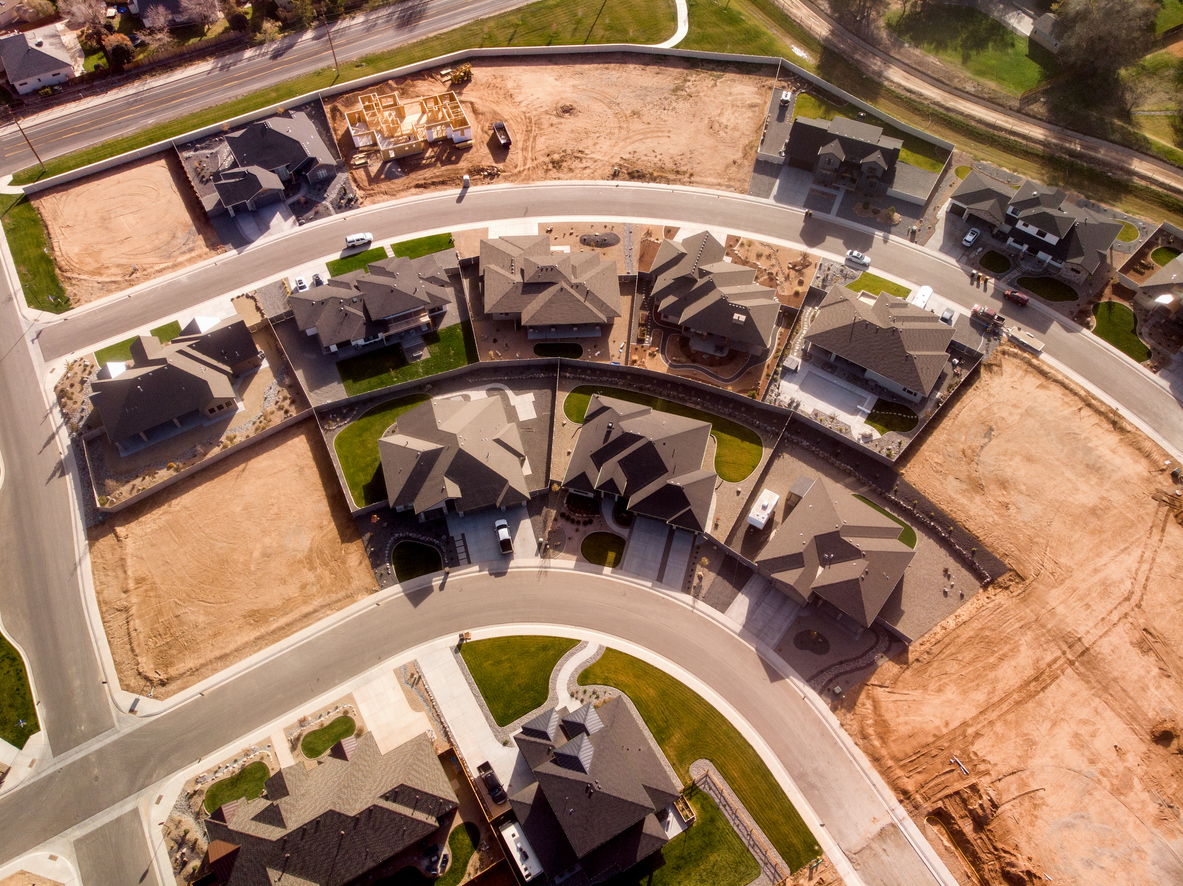
Individuals and families bought the vast majority of the hundreds of thousands of new homes built last year. However, rising mortgage rates are making those purchases much more expensive, potentially leading to a drop in demand from those traditional buyers.
Investors with billions of dollars, on the other hand, are eager to buy these homes in bulk, which is a boon to home builders who have increased construction in recent months.
According to a report from John Burns Real Estate Consulting LLC and the National Rental Home Council, a landlord trade group, more than one in every four houses purchased by a professional rental investor in the fourth quarter of last year was a new-construction house.
Only 3% of the homes purchased by these investors in the third quarter of 2019 were brand new.
According to real-estate research and advisory firm Zelman & Associates, large investors have amassed $89 billion in capital to spend on building or purchasing new rental homes, but have only deployed about one-quarter of it.
Because it allows them to turn a profit on new homes faster, home builders frequently choose to sell in bulk to investors. Investors have more capital and can close on a large number of properties at the same time.
According to government data, there were 799,000 single-family homes under construction in the United States in February, a 28 percent increase from the previous year.
Meanwhile, rising mortgage rates are reducing the number of people who can afford to buy new homes. According to Freddie Mac, the average fixed rate for a 30-year mortgage was 4.72 percent as of April 7, up from 2.97 percent the previous month. According to the Mortgage Bankers Association, mortgage application volume fell 41% compared to the same week in 2021.
This makes selling to rental investors even more appealing to builders, particularly those who typically sell to entry-level buyers, according to Robert Dietz, chief economist at the National Association of Home Builders, a trade group for home builders.
"Those prospective buyers still want more space," he explained. "As a result, single-family rental is likely to remain strong."
According to investors, new rentals allow people to live in single-family homes in desirable neighborhoods where they cannot afford to buy or prefer to rent. Investors provide a consistent sale even if interest rates rise because many have cash on hand.
"We can offer them something that feels a lot more certain," Sudha Reddy, founder of investor Haven Realty Capital, said. Haven Realty Capital has purchased more than $1.1 billion in new construction rental homes from builders since late 2020.
Builders such as Rich Eneim, Jr. agree that selling to investors has a lot of appeal. His company, Keystone Homes in Scottsdale, Ariz., decided last year to refocus almost entirely on rental houses. Mr. Eneim stated that Keystone has an 800-house construction pipeline and that roughly half of what it is currently building will be sold to investors. He will keep the other half and rent it out to tenants.
The Havenly Fountain Hills, a community of stucco-and-tile homes about 30 miles outside of downtown Phoenix, is one of Mr. Eneim's most recent projects. Houses are only about 1,100 square feet on average, but they can rent for more than $2,500 per month. Mr. Eneim explained that collecting rent now and selling to an investor later allows the company to weather any downturns in the for-sale market.
"When we do a for-sale community, we have to sell, regardless of the price, regardless of the market, whether it's good or bad," he explained. "We can be patient for rent."
Many of the new homes being purchased by investors were originally intended to be rentals, but the vast majority are homes that builders later decide to sell to rental companies. According to Burns firm estimates, these homes account for up to 9% of all single-family home starts when combined, though that percentage has been rising in recent years.
Land prices in hot markets are also being bid up by rental investors, according to home builders and analysts. According to analysts, higher land prices make it difficult to build for entry-level buyers in those areas.
According to Rick Palacios, an analyst at the Burns firm, rental builders can often pay more for land because they are backed by larger capital sources, build denser communities with more units, and come in with plans to raise rents every year. "It's not a surprise," he said. "Rents in the Southwest are increasing by double digits, and they have been increasing by double digits for quite some time."