
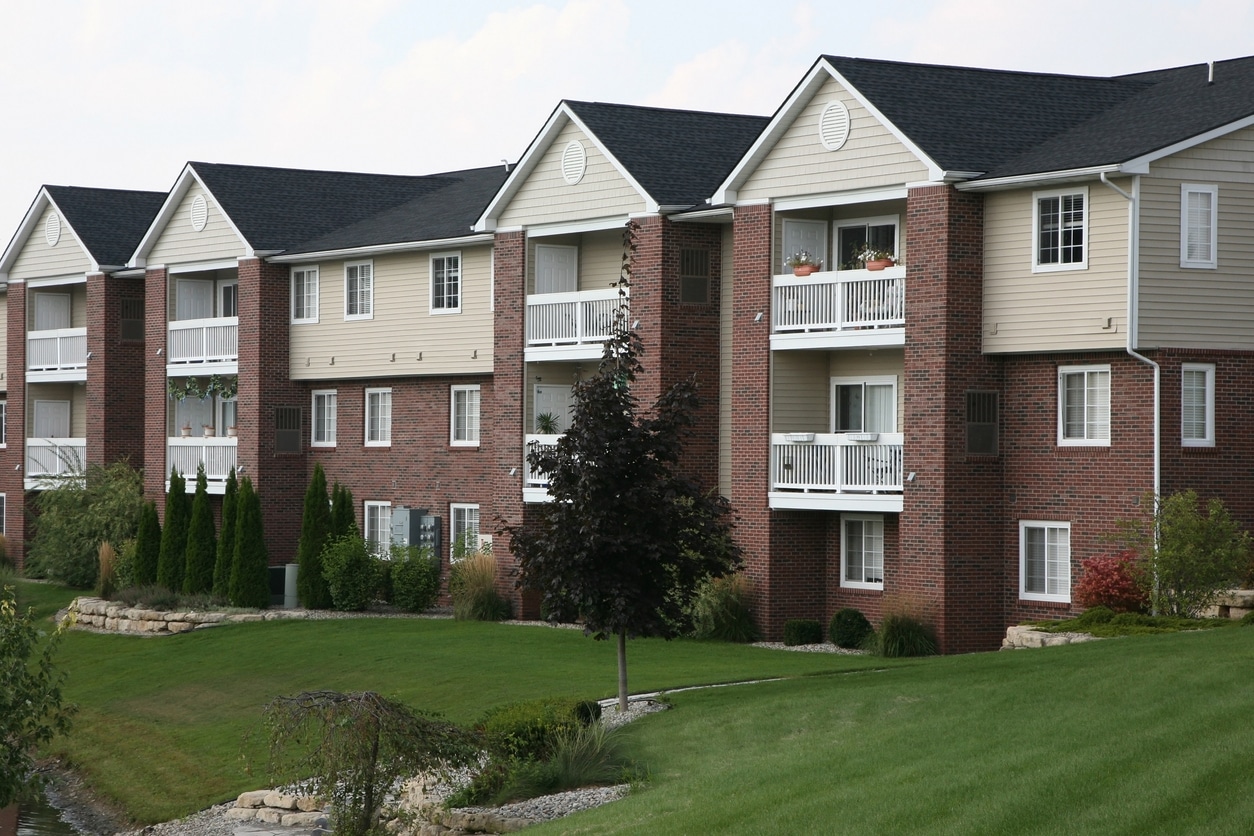
Following our exploration of transportation programs in Part 3, we now turn to another high-traffic sector on ProgramBusiness.com: habitational insurance. Brokers continue to search for programs that address aging property stock, rising replacement costs, and more frequent weather-related claims. Meanwhile, managing general agents (MGAs) use the platform to gain visibility among those looking to place risks.
From multifamily housing and assisted living facilities to large real estate portfolios, the demand for specialized habitational coverage reflects an industry adapting to complex property exposures and growing capacity needs. Here’s an overview of what habitational insurance programs typically include — along with several programs for brokers to explore as they help their clients navigate today’s market conditions.
Related articles:
What Is Habitational Insurance?
Habitational insurance provides property and liability protection for buildings where people live or rent, such as apartments, condominiums, student housing, and senior living facilities. It’s a vital safeguard for owners, investors, and property managers whose assets are vulnerable to fire, storm, or tenant-related losses.
Typical coverages include:
- Property insurance (buildings, contents, loss of rent)
- General liability and premises liability
- Umbrella and excess liability
- Equipment breakdown
- Ordinance or law and loss of income
- Flood, earthquake, and wind endorsements
- Optional crime, cyber, and EPLI protection
As habitational portfolios expand across states and risk zones, brokers increasingly seek tailored habitational programs. Key factors include broad capacity, multi-state coverage, and flexible underwriting that accounts for property age, occupancy, and renovation status.
What To Look For in Habitational Insurance Providers
When evaluating programs, brokers and MGAs should consider:
- Underwriting expertise in multifamily and mixed-use risks
- Admitted and non-admitted flexibility to address challenging properties
- Capacity for high-value or CAT-exposed accounts
- Comprehensive coverage forms, combining property and liability
- Responsive claims handling and risk control for fire, maintenance, and tenant exposures
- Digital quoting and submission options for speed and scalability
ProgramBusiness enables brokers to compare programs side by side and connect directly with markets that meet their clients’ unique habitational insurance needs.
Top Habitational Insurance Programs To Consider
The following programs represent a cross-section of leading solutions available through the marketplace — each designed to address today’s complex property, liability, and catastrophe exposures for multifamily, condo, and commercial real estate portfolios.
Arrowhead General Insurance Agency — Small Business Commercial Earthquake
Arrowhead’s Small Business Commercial Earthquake Program offers tailored protection for smaller commercial and habitational properties in California exposed to earthquake and flood risk. The program covers homeowners associations (HOAs), apartment buildings, and multi-unit condos (four-unit minimum), with coverage limits up to $20 million for habitational occupancies.
Key highlights include:
- Replacement cost valuation with actual loss sustained for business income
- Deductible options from 5% to 25% per unit
- Ordinance and law coverage (A full; B and C sub-limited to 10%)
- Business income coverage up to 40% of total insured value
- Eligibility for buildings meeting updated construction standards
Backed by A+ XV rated carriers, Arrowhead combines disciplined underwriting with efficient quoting, providing habitational owners essential protection in seismic zones.
Program Listing: Arrowhead Small Business Commercial Earthquake
eMaxx Assurance Group — Property Program
The Property Program from eMaxx Assurance Group supports a wide range of commercial and habitational exposures, including excess habitational, apartments, assisted living facilities, condos, and real estate schedules.
Available nationwide, this program offers customized solutions for portfolios ranging from single-building placements to large multi-property accounts. eMaxx’s underwriting flexibility and access to multiple markets enable brokers to secure coverage for higher-value properties, vacant buildings, and coastal or CAT-exposed assets that might otherwise be difficult to place.
Program listing: eMaxx — Property
HabPro Insurance From Novacore — Commercial Real Estate Insurance
HabPro Insurance, a best-in-class program from Novacore, is a one-stop commercial real estate insurance provider specializing in package and mono-line property for apartments and condominiums. HabPro delivers ground-up coverage solutions for small and middle-market habitational risks.
Appetite highlights include:
- Class A & B risks, built 1985 or newer
- Condos, apartments, subsidized and LIHTC developments (up to 15%)
- Mixed-use buildings (up to 33% mercantile)
- Student housing and 55+ independent living communities
- Nationwide availability (excluding AK, HI, FL, LA, NYC’s five boroughs, and Long Island)
Program features:
- Single-location limits up to $50 million
- Robust property enhancement endorsement
- Business income, equipment breakdown, and ordinance & law (A–D)
- A+ rated carrier backing with exclusive policy forms
- Dedicated underwriting expertise and superior service
HabPro stands out for its competitive coverage options and creative solutions for traditional and nontraditional habitational accounts.
Program listing: HabPro Insurance — Commercial Real Estate Insurance
Jimcor Agencies — Real Estate Program
Jimcor Agencies’ Real Estate Program offers broad solutions for hard-to-place property risks across all occupancy types and sizes, with access to over 30 markets.
Targeted classes include:
- Apartments, condos, and dwellings
- Student and senior housing
- Subsidized/Section 8 properties
- Associations, rentals, and vacant land or buildings
- Mixed-use, hospitality, and high-value coastal properties
Key coverages:
- Primary and excess property
- Builders risk, inland marine, and DIC
- Casualty and professional lines (E&O, D&O, EPLI, cyber)
- Environmental and pollution, including mold
- Umbrella and workers’ compensation
Jimcor provides occurrence or claims-made forms, admitted and non-admitted options, and virtually unlimited capacity for accounts under renovation, with prior claims, or requiring specialized terms.
Program listing: Jimcor Agencies — Real Estate Program
USG Insurance Services — Habitational & Casualty Excess Programs
USG Insurance Services offers two integrated programs that help brokers manage both primary and excess layers of habitational risks nationwide.
USG Habitational Insurance
This program covers a diverse mix of properties, including apartments, condos, student housing, senior living, HUD and subsidized housing, co-ops, and short-term rentals. Coverage options include property, casualty, directors and officers, errors and omissions, environmental/pollution (including mold), builders risk, and umbrella.
Program listing: USG Insurance Services — Habitational Insurance
USG Casualty Excess Program
Built for scalability, this program provides virtually unlimited capacity and access to over 260 A-rated admitted and non-admitted carriers. It’s ideal for multi-state or higher-limit portfolios, offering broad excess liability for habitational, contractor, hospitality, and healthcare classes.
Together, USG’s programs provide brokers with the flexibility to efficiently place both standard and complex residential accounts through a single platform.
Program listing: USG Insurance Services — Casualty & Excess Insurance
Market Trends Driving Habitational Insurance in 2025
Several developments are shaping today’s habitational insurance market. These trends underscore the need for programs that combine underwriting strength, national reach, and creative solutions for complex property exposures.
Rising Property Valuations
Inflation and materials shortages continue to drive reconstruction costs, requiring updated replacement cost valuations.
Inflation and supply chain disruptions continue to push reconstruction costs higher. Persistent shortages in key building materials — including concrete, roofing, and electrical components — have driven price spikes and project delays across the U.S. construction sector, according to Construction Dive.
These pressures make it essential for property owners and insurers to keep replacement cost valuations current. Outdated figures can leave habitational properties underinsured when major losses occur.
Increased Catastrophe Losses
Severe weather, hail, and wildfire events are prompting insurers to reprice and restrict capacity in high-risk zones.
Global insured losses from natural catastrophes totaled $80 billion in the first half of 2025, the second-costliest start to a year on record.
Aging Building Stock
Older roofs and outdated infrastructure are driving up both the frequency and severity of claims. According to the National Insurance Crime Bureau (NICB), roof-related claims have surged to record highs across the United States, straining insurers already managing inflation and reinsurance costs.
Many habitational properties built decades ago now face increased scrutiny for roof age, materials, and maintenance, as underwriters work to curb losses tied to weather damage and fraudulent or inflated claims.
Higher Tenant Liability Exposures
The growth of short-term rentals is reshaping risk profiles for multifamily and mixed-use properties. Platforms like Airbnb can blur the line between residential and commercial use, exposing property owners to coverage gaps and liability issues that standard policies may not address.
Frequent guest turnover increases wear and tear, noise complaints, and potential property damage. Meanwhile, unvetted occupants elevate the risk of accidents or security incidents.
Insurers are responding by tightening underwriting guidelines, requiring disclosure of short-term rental activity, and in some cases, excluding coverage for unapproved or undisclosed rentals. For brokers, it’s becoming essential to verify how clients use their properties and ensure habitational programs include clear language for short-term or transient occupancies.
Portfolio-Based Underwriting
Insurers are moving toward evaluating entire property portfolios rather than single buildings. This shift allows them to use advanced analytics to identify resilient risks and price them more accurately — particularly for wildfire-exposed properties in the western United States.
As Lockton Re explains, portfolios that incorporate detailed secondary data points such as roof type, defensible space, and fire-mitigation practices can reduce modeled wildfire losses by more than 20%. These refined analytics enable insurers and reinsurers to offer more consistent pricing, enhance capacity, and strengthen portfolio resiliency in a changing climate.
Searching for Habitational Insurance Solutions?
Habitational insurance remains one of the most in-demand categories on ProgramBusiness.com. Whether you’re seeking primary property, excess capacity, or catastrophe coverage, the programs above represent a diverse range of solutions.
Explore these listings, connect with underwriters directly through the ProgramBusiness marketplace, and increase your program’s visibility by setting up a storefront today.
FAQ About Habitational Insurance Programs
What does habitational insurance cover?
It typically covers property, liability, and loss of income for apartments, condos, and other residential buildings, along with optional endorsements for equipment breakdown, flood, or earthquake.
Who needs habitational insurance?
Property owners, landlords, real estate investors, and property managers who lease or rent units need this coverage to protect their assets and income.
What is considered a habitational property?
Any residential building where people live or rent — apartments, condos, student housing, senior living facilities, or mixed-use developments with residential occupancy.
How much does habitational insurance cost?
Pricing depends on building age, location, construction type, occupancy, loss history, and desired coverage limits. CAT-exposed or older properties typically command higher premiums.
What does habitational insurance not cover?
Most policies exclude wear and tear, intentional damage, and maintenance-related issues. Some carriers may also limit coverage for unoccupied or poorly maintained properties.
About ProgramBusiness
ProgramBusiness is a leading insuretech marketplace connecting agents, brokers, MGAs and carriers. We enable professionals to list their specialty programs, receive verified feedback, and be discovered by motivated buyers across the industry.
 Jeff Neilson
Co-founder of Neilson Marketing Services and ProgramBusiness.com, Jeff has 30 years of experience in the insurance industry putting his expertise to work for P/C agencies, MGAs/MGUs, wholesalers, E&S brokers, and program administrators nationwide.